


€ 34,99 Gratis verzending

Uitgelicht
|
|
34,99 |
Naar shop
|

|
42,18 |
Naar shop
|
| VERGELIJK ALLE AANBIEDERS (2) | ||
 Beschrijving
Vergelijk aanbieders (2)
€ 34,99 Gratis verzending
€ 42,18 € 3,14 verzendkosten Totaal € 45,32
Winkels met andere maten
Beschrijving
(1)
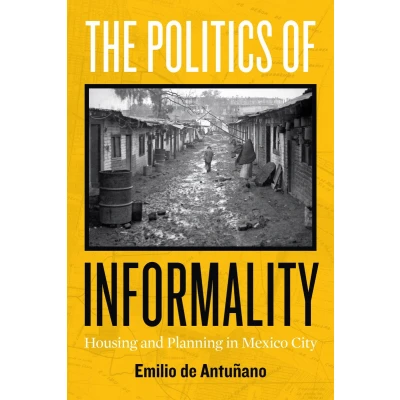
An examination of the central role and political power of informal neighborhoods in Mexico City. At the beginning of the twentieth century, Mexico City was tightly bounded, with a population of about half a million people. By the end of that century, it was an unfathomable megalopolis of some 20 million. It had also become exhibit A in an "urban crisis" decried by demographers, NGOs, and the Mexican government. Mexico City's greatest sin was its shantytowns—informal neighborhoods built in defiance of regulations and viewed as incurably disordered. The Politics of Informality is an illuminating political and intellectual history, examining how these neighborhoods have figured in Mexican life and in the ideologies underlying urban planning. Prior to the Mexican Revolution of 1910, urban experts saw Mexico City as a tidy modern capital in-waiting. But during the interwar period, informal neighborhoods boomed, as working-class families asserted claims to housing under the revolution's framework of citizenship and social justice. Then, amid Cold War realignments, a new cohort of urban experts pathologized Mexico City, turning it into a transnational laboratory for the study of poverty, migration, and overpopulation. Tracing a fascinating evolution, ThePolitics of Informality underscores the stubborn opposition between technocratic modernism and revolutionary, extralegal politics.
 Prijshistorie
 * Prijshistorie bevat geen data van Amazon.
Prijzen voor het laatst bijgewerkt op:
 Gerelateerde resultaten
 Productspecificaties


