
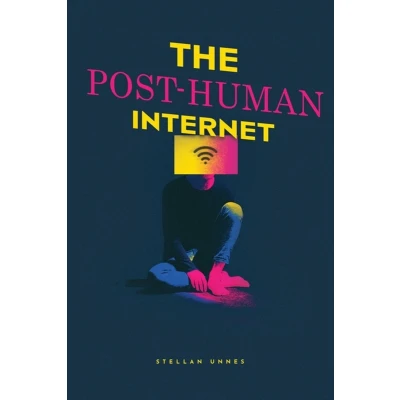
the Post-Human Internet: On Agents, Non-Human Majority, and Redesign of Presence, Power, Meaning in Network Era
Uitgelicht

|
13,00 |
Naar shop
|

|
13,90 |
Naar shop
|

|
13,90 |
Naar shop
|
| VERGELIJK ALLE AANBIEDERS (3) | ||
 Beschrijving
Bol
On June 3, 2026, for the first time in the internet's history, more than half of all web traffic was not generated by a human being.No announcement was made. The number moved past fifty percent, and the network humanity built to connect itself became, without fanfare, primarily occupied by something else.The Post-Human Internet is the reckoning that moment demands. Drawing on cutting-edge research in AI infrastructure, legal philosophy, cognitive science, and network economics, this book maps what it actually means - technically, legally, economically, and existentially - when the primary user of the global communications network is no longer a person.What you will find inside: - Why automation is growing eight times faster than human traffic - and has no projected ceiling- How AI agents now outnumber humans in enterprise environments by 109 to 1- Why the behavioral signals that distinguish human from machine are collapsing under AI mimicry- How the legal frameworks built to hold technology accountable were designed for a world that no longer exists- What synthetic consensus is doing to democratic epistemology - and why standard countermeasures are failing- Whether AI agents deserve moral consideration - and what the evidence from frontier AI welfare research actually shows- How to redesign the internet for mixed human-agent populations without sacrificing human legibility, accountability, or agencyThis is not a book about artificial intelligence replacing humanity. It is a book about what happens when the tool becomes the environment - and the builders discover they are living inside what they made.The agents are here. The question is what we owe each other - human and non-human alike - now that they are.


 Beschrijving
(1)
Beschrijving
(1)
On June 3, 2026, for the first time in the internet's history, more than half of all web traffic was not generated by a human being.No announcement was made. The number moved past fifty percent, and the network humanity built to connect itself became, without fanfare, primarily occupied by something else.The Post-Human Internet is the reckoning that moment demands. Drawing on cutting-edge research in AI infrastructure, legal philosophy, cognitive science, and network economics, this book maps what it actually means - technically, legally, economically, and existentially - when the primary user of the global communications network is no longer a person.What you will find inside: - Why automation is growing eight times faster than human traffic - and has no projected ceiling- How AI agents now outnumber humans in enterprise environments by 109 to 1- Why the behavioral signals that distinguish human from machine are collapsing under AI mimicry- How the legal frameworks built to hold technology accountable were designed for a world that no longer exists- What synthetic consensus is doing to democratic epistemology - and why standard countermeasures are failing- Whether AI agents deserve moral consideration - and what the evidence from frontier AI welfare research actually shows- How to redesign the internet for mixed human-agent populations without sacrificing human legibility, accountability, or agencyThis is not a book about artificial intelligence replacing humanity. It is a book about what happens when the tool becomes the environment - and the builders discover they are living inside what they made.The agents are here. The question is what we owe each other - human and non-human alike - now that they are.
 Productspecificaties
 Prijshistorie
* Prijshistorie bevat geen data van Amazon, Amazon Marketplace.
Prijzen voor het laatst bijgewerkt op:
 Gerelateerde resultaten


