


€ 31,99 Gratis verzending

Gesponsorde links
|
|
31,99 |
Naar shop
|

|
33,11 |
Naar shop
|

|
33,11 |
Naar shop
|
| VERGELIJK ALLE AANBIEDERS (3) | ||
 Beschrijving
Vergelijk aanbieders (3)
Gesponsorde links · Sommige shops betalen ons een vergoeding
€ 31,99 Gratis verzending
€ 33,11 Gratis verzending
€ 33,11 Gratis verzending
Winkels met andere maten
Beschrijving
(1)
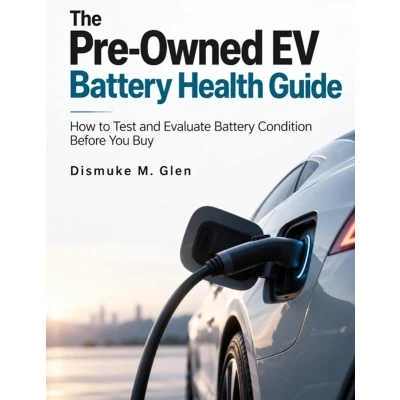
Worried that a used EV has already lost significant battery capacity? Can you trust the health percentage shown by the vehicle or a diagnostic app? What if the seller says the battery is "excellent," but you have no practical way to verify the claim?The Pre-Owned EV Battery Health Guide gives you a structured way to answer those questions before you commit your money.Instead of relying on seller assurances, displayed range, or a single health number, you will learn how to collect, interpret, and correlate evidence about the battery system.You will learn how to: - Identify the exact battery pack and inspect accessible external components safely- Use vehicle information and OBD diagnostics to examine SOC, SOH, voltage, current, temperature, and cell voltage- Estimate usable capacity and calculate battery retention and degradation- Evaluate cell balance, thermal behavior, and AC/DC charging performance- Interpret fault codes and investigate repairs, replacements, BMS service, recalls, and warranty history- Recognize reset, recalibrated, incomplete, implausible, or misleading health readings- Combine physical, capacity, diagnostic, charging, thermal, and historical evidence- Compare battery condition with price, warranty, and potential repair exposure- Know when specialist diagnostics are justified- Make a defensible Buy, Negotiate, Inspect Further, or Walk Away decisionBattery health is an evidence problem.A high SOH percentage does not automatically prove expected usable energy. A long displayed range does not prove battery health. A successful charging session does not prove that the battery and charging system are free of problems.Individual measurements can mislead when viewed alone. The stronger approach is to compare independent observations and ask whether they tell the same story.Move from guessing to evidence-based evaluation. From trusting claims to verifying them. From displayed range to usable capacity. From seeing a fault code to understanding its significance.The focus is practical, non-invasive owner-level inspection and diagnostics. You do not need to become a high-voltage battery technician; you need to understand what the evidence means and recognize when professional evaluation is required.The goal is not to collect impressive diagnostic numbers. It is to answer one practical question: Is this battery condition acceptable for the price and intended use?Turn scattered observations into a documented battery-health assessment and a practical purchase recommendation.Know what you are buying. Measure what you can. Question what you cannot verify. Make the battery part of the purchase decision-not a gamble you discover after the transaction.
 Prijshistorie
* Prijshistorie bevat geen data van Amazon, Amazon Marketplace.
Prijzen voor het laatst bijgewerkt op:
 Gerelateerde resultaten
 Productspecificaties


