

€ 14,11 Gratis verzending

Gesponsorde links
|
|
14,11 |
Naar shop
|

|
14,11 |
Naar shop
|

|
15,00 |
Naar shop
|
| VERGELIJK ALLE AANBIEDERS (3) | ||
 Beschrijving
Vergelijk aanbieders (3)
Gesponsorde links · Sommige shops betalen ons een vergoeding
€ 14,11 Gratis verzending
€ 14,11 Gratis verzending
€ 15,00 € 2,99 verzendkosten Totaal € 17,99
Winkels met andere maten
Beschrijving
(1)
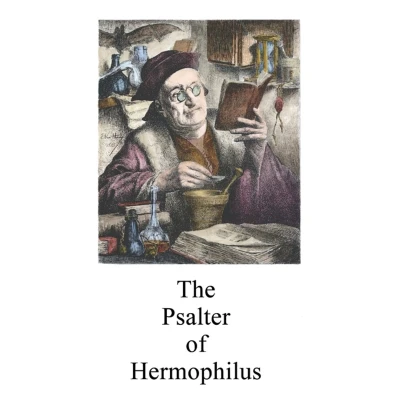
The Psalter of Hermophilus is an extended alchemical treatise presenting the "Work of the Sages" as an imitation of divine creation. Whereas God creates from nothing, the philosopher must work upon a given matter, called Chaos, and use fire as the instrument and guide. Art, described as the "ape of Nature," begins by separating light from darkness, subtle from gross, and fire from earth.The central substance is a mineral or metallic Chaos containing the principles of Sulphur and Mercury, figured as male and female, Sun and Moon, fixed and volatile, Heaven and Earth. These are naturally joined but confused; the artist must separate, purify, and reunite them more perfectly. From this process arise Diana and Apollo, Moon and Sun, and ultimately the Mercury of the Sages, the living agent from which philosophical Gold and the Stone may be produced.The text repeatedly explains the same mystery through shifting names: Chaos, Magnesia, Rebis, Laton, Azoth, Permanent Water, Vinegar, Virgin Earth, Steel, Magnet, and the Phoenix. These terms describe stages or aspects of one work: dissolution, putrefaction, purification, whitening, reddening, sublimation, conjunction, and multiplication. The matter is said to contain body, soul, and spirit, also Salt, Sulphur, and Mercury, which must be brought into harmonious unity.A major theme is that nothing foreign enters the Work. The solvent, the body dissolved, the seed extracted, and the fire that perfects them must all be of one nature. Common Mercury is rejected as insufficient unless purified, heated, and transformed into philosophical Mercury.The treatise culminates in the doctrine that dissolution is the foundation and multiplication the end. Through repeated cycles of death and rebirth, the body becomes spirit and spirit becomes fixed body. The whole Magistery begins, continues, and is completed by fire, understood finally as a divine quintessence granted to the Sages.
 Prijshistorie
* Prijshistorie bevat geen data van Amazon, Amazon Marketplace.
Prijzen voor het laatst bijgewerkt op:
 Gerelateerde resultaten
 Productspecificaties


