


€ 25,79 Gratis verzending

Uitgelicht
|
|
25,79 |
Naar shop
|

|
27,83 |
Naar shop
|

|
27,83 |
Naar shop
|
| VERGELIJK ALLE AANBIEDERS (3) | ||
 Beschrijving
Vergelijk aanbieders (3)
€ 25,79 Gratis verzending
€ 27,83 Gratis verzending
€ 27,83 Gratis verzending
Winkels met andere maten
Beschrijving
(1)
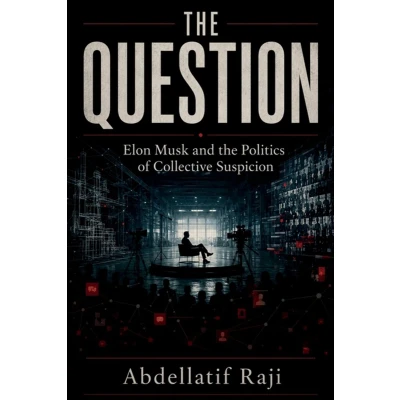
What happens when criticism of individuals becomes suspicion of an entire population?In The Question: Elon Musk and the Politics of Collective Suspicion, Abdellatif Raji examines how one of the world's most influential public figures represents Muslims, Muslim institutions, immigration, crime, terrorism, and demographic change.The book begins with a direct question posed to Elon Musk: "Are you anti-Muslim?" Rather than offering a simple denial, Musk responds by discussing rape, murder, incompatible beliefs, and laws contrary to Western norms. That exchange does not settle the issue-but it raises a deeper question: What does it mean when a man asked about millions of people answers by describing crimes?Drawing on Musk's public statements, political endorsements, online activity, and ownership of X, Raji investigates the movement from legitimate criticism of offenders and extremist ideologies to broader suspicion of Muslims as a population.The analysis considers Musk's rhetoric about grooming gangs, terrorism, immigration, demographic change, civil conflict, the Alternative for Germany, Tommy Robinson, and the political power of algorithmic amplification.The book separates three distinct questions: Intent: What does Musk privately believe? Pattern: What does his repeated public conduct show? Impact: What political and social consequences does that conduct produce?The book also presents substantial counterevidence, including Musk's past opposition to entry restrictions affecting Muslim-majority countries, his support for lawful immigration, and the absence of an explicit demand to remove Muslims' ordinary civil rights or a direct command to commit violence.Rather than relying on exaggerated accusations or claims about Musk's private thoughts, The Question advances a narrower and more carefully documented conclusion: whatever Musk personally believes, his repeated public framing and political alliances function as anti-Muslim politics by associating Muslims with criminality, terrorism, alien law, demographic danger, and approaching civil conflict.At its heart, this is a book about individual responsibility, equal citizenship, and the right not to be judged by the actions of strangers who share one's identity.It argues that crimes should be prosecuted, extremist ideologies confronted, borders governed, and institutions held accountable-without transferring guilt to millions of ordinary people.Provocative, evidence-driven, and attentive to both accusation and counterargument, The Question asks readers to consider where legitimate criticism ends and collective suspicion begins.
 Prijshistorie
 * Prijshistorie bevat geen data van Amazon, Amazon Marketplace.
Prijzen voor het laatst bijgewerkt op:
 Gerelateerde resultaten
 Productspecificaties


