


€ 192,41 Gratis verzending

Uitgelicht
|
|
192,41 |
Naar shop
|
| VERGELIJK ALLE AANBIEDERS (1) | ||
 Beschrijving
Vergelijk aanbieders (1)
€ 192,41 Gratis verzending
Winkels met andere maten
Beschrijving
(1)
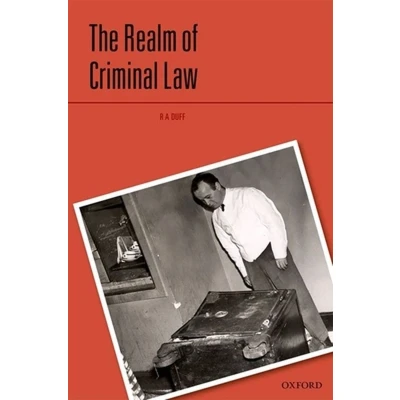
We are said to face a crisis of over-criminalization: our criminal law has become chaotic, unprincipled, and over-expansive. This book proposes a theory of criminal law, as an institution that can play an important but limited role in the civil order of a political community: it shows how criminal law could be ordered, principled, and restrained. We are said to face a crisis of over-criminalization: our criminal law has become chaotic, unprincipled, and over-expansive. This book proposes a normative theory of criminal law, and of criminalization, that shows how criminal law could be ordered, principled, and restrained. The theory is based on an account of criminal law as a distinctive legal practice that functions to declare and define a set of public wrongs, and to call to formal public account those who commit such wrongs; an account of the role that such practice can play in a democratic republic of free and equal citizens; and an account of the central features of such a political community, and of the way in which it constitutes its public realm-its civil order. Criminal law plays an important, but limited, role in such a political community in protecting, but also partly constituting, its civil order. On the basis of this account, we can see how such a political community will decide what kinds of conduct should be criminalized - not by applying one or more of the substantive master principles that theorists have offered, but by considering which kinds of conduct fall within its public realm (as distinct from the private realms that are not the polity's business), and which kinds of wrong within that realm require this distinctive kind of response (rather than one of the other kinds of available response). The outcome of such a deliberative process will probably be a more limited, and a more rational and principled, criminal law.
 Productspecificaties
| EAN |
|
|---|---|
| Maat |
|
 Prijshistorie
 Prijzen voor het laatst bijgewerkt op:
 Gerelateerde resultaten


