

€ 23,04 Gratis verzending

Gesponsorde links
|
|
23,04 |
Naar shop
|

|
23,04 |
Naar shop
|

|
24,99 |
Naar shop
|
| VERGELIJK ALLE AANBIEDERS (3) | ||
 Beschrijving
Vergelijk aanbieders (3)
Gesponsorde links · Sommige shops betalen ons een vergoeding
€ 23,04 Gratis verzending
€ 23,04 Gratis verzending
€ 24,99 € 2,99 verzendkosten Totaal € 27,98
Winkels met andere maten
Beschrijving
(1)
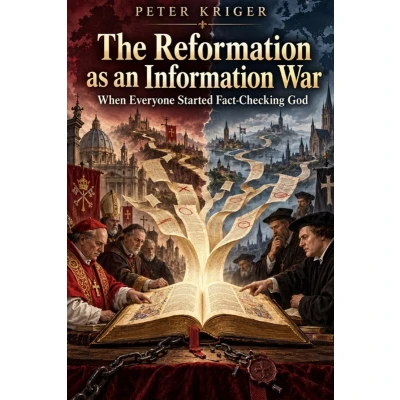
The Elector of Saxony owned five thousand holy bones, and he had them printed in a catalogue with illustrations, because a collection nobody can browse is a wasted asset. Eight years later his own university professor published a list of complaints about precisely this line of business. The Elector protected him for the rest of his life and never agreed with a word he said. That is the Reformation in one household, and it is not the version most of us were taught. The usual version has a brave man, a hammer, a door, and the birth of the modern mind. This book has the same brave man, and then it has the people standing behind him with an eye on the monastery farmland. The demand for reform was real, ancient, and entirely Catholic. Everyone from the popes down knew the accounts were rotten. What nobody intended, and what happened anyway, was that a quarrel about accounting turned into a new theory of how religious truth gets settled: not through a living chain of ordained men and the accumulated judgment of the Fathers, but through a document any literate reader could check for himself. That sounds like progress. It is the catastrophe at the center of this book. Redefine faith as information and it starts behaving like information - it copies, it versions, it forks. Apostolic succession is a chain of custody, not a checksum. The Fathers were the case law, and the case law was deleted. Take away the arbiter and verification does not converge on truth. It branches. Then the branches branch. Five centuries on, there is still nobody with the standing to merge them back. And an information war is never won by whoever is right. It is won by whoever owns the presses and the ground they stand on. Which is why the sincere phase lasted about four years, and why the settlement was written by princes who wanted abbey land, a king who wanted a wife, and printers who had found a product that sold out in a week and cost nothing in royalties. This is the story of how a necessary correction became a permanent break, why the break cannot heal on its own terms, and what it costs to treat revelation as a claim awaiting an audit. It argues with the reformers instead of patronizing them, it refuses to let Rome off, and before it finishes it puts the strongest case against itself without flinching. You cannot fact-check God. Europe spent a hundred and thirty years establishing this, at considerable expense, and the invoices are still arriving. Keywords: Reformation; Martin Luther; apostolic succession; printing press; religious authority; schism; Counter-Reformation.
 Prijshistorie
* Prijshistorie bevat geen data van Amazon, Amazon Marketplace.
Prijzen voor het laatst bijgewerkt op:
 Gerelateerde resultaten
 Productspecificaties


