


€ 18,00 € 2,99 verzendkosten Totaal € 20,99

Gesponsorde links
|
|
18,00 |
Naar shop
|

|
18,46 |
Naar shop
|

|
18,46 |
Naar shop
|
| VERGELIJK ALLE AANBIEDERS (3) | ||
 Beschrijving
Vergelijk aanbieders (3)
Gesponsorde links · Sommige shops betalen ons een vergoeding
€ 18,00 € 2,99 verzendkosten Totaal € 20,99
€ 18,46 Gratis verzending
€ 18,46 Gratis verzending
Winkels met andere maten
Beschrijving
(1)
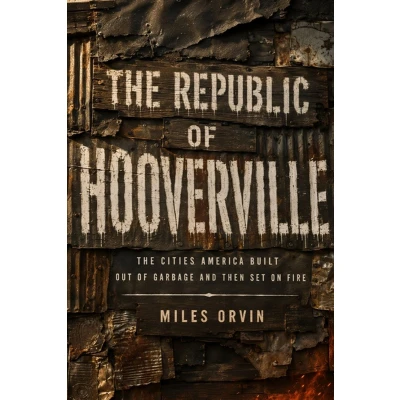
For about ten years, the United States contained several hundred cities it would not admit were there.They were built out of packing crates, tar paper, and flattened tin cans, on flood plains and rail sidings and municipal dumps, by people who had run out of every other option. What almost nobody remembers is what happened next. They elected mayors. They wrote building codes and enforced them. They ran courts, held funerals, and built churches - one of them out of orange crates, dedicated in January 1932 and covered by the New York Times. In St. Louis, three hundred children walked from a mile of shacks on the Mississippi to public schools every morning. In Seattle, six men governed nine acres through a committee apportioned two white, two Black, two Filipino, in a decade when no legal body in the city would have permitted it. When that settlement was burned out twice by the health department, the residents rebuilt in salvaged concrete and sheet tin, because concrete and tin do not burn.The word itself was invented by a Democratic Party press agent in 1930, as an insult aimed at a president. The people it was meant to describe took it, painted it on a sign, and used it as an address.This is a history of those settlements: how they were built, how they governed themselves, who actually lived in them, and how the country eventually removed them with bulldozers, kerosene, and federal money. It is also an account of why so little of this was written down - and of the handful of people who wrote it down anyway.
 Prijshistorie
* Prijshistorie bevat geen data van Amazon, Amazon Marketplace.
Prijzen voor het laatst bijgewerkt op:
 Gerelateerde resultaten
 Productspecificaties


