

€ 18,55 Gratis verzending

Gesponsorde links
|
|
18,55 |
Naar shop
|

|
21,00 |
Naar shop
|
| VERGELIJK ALLE AANBIEDERS (2) | ||
 Beschrijving
Vergelijk aanbieders (2)
Gesponsorde links · Sommige shops betalen ons een vergoeding
€ 18,55 Gratis verzending
€ 21,00 € 2,99 verzendkosten Totaal € 23,99
Winkels met andere maten
Beschrijving
(1)
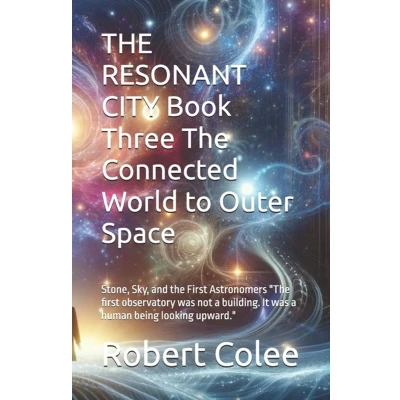
Ancient Observatories >"The first observatory was not a building. It was a human being looking upward." Thousands of years before the invention of telescopes... Before clocks... Before mathematics had been formalized... Before written science... People stood beneath the night sky and noticed something extraordinary. The heavens followed patterns. The Sun always returned. The Moon changed shape in a predictable cycle. Certain stars appeared with each season. Others never rose above the horizon. Comets occasionally blazed across the darkness. Meteor showers arrived unexpectedly. Eclipses interrupted the ordinary rhythm of day and night. Unlike many events on Earth, the sky possessed remarkable order. For early civilizations, this order became one of humanity's first scientific classrooms. The stars did not merely inspire myths. They invited measurement. The Sky as a Calendar One of the earliest practical reasons for observing the heavens was survival. Agricultural societies needed to know: When should crops be planted? When would seasonal rains arrive? When might rivers flood? When should animals be moved to new grazing lands? Without accurate calendars, entire harvests could fail. Ancient observers gradually discovered that the annual motion of the Sun and the changing positions of stars provided dependable markers of seasonal change. Astronomy became agriculture's silent partner. Watching Without Telescopes It is easy to underestimate what can be seen with the unaided eye. A careful observer can identify: thousands of stars, the planets Mercury, Venus, Mars, Jupiter, and Saturn, lunar eclipses, solar eclipses, the Milky Way, bright comets, meteor showers, conjunctions, >Many ancient astronomers spent lifetimes watching these patterns. Their greatest instrument was patience. Stone and Shadow Eventually, observation gave rise to construction
 Prijshistorie
* Prijshistorie bevat geen data van Amazon.
Prijzen voor het laatst bijgewerkt op:
 Gerelateerde resultaten
 Productspecificaties


