

€ 9,23 Gratis verzending

Gesponsorde links
|
|
9,23 |
Naar shop
|

|
9,23 |
Naar shop
|

|
10,50 |
Naar shop
|
| VERGELIJK ALLE AANBIEDERS (3) | ||
 Beschrijving
Vergelijk aanbieders (3)
Gesponsorde links · Sommige shops betalen ons een vergoeding
€ 9,23 Gratis verzending
€ 9,23 Gratis verzending
€ 10,50 € 2,99 verzendkosten Totaal € 13,49
Winkels met andere maten
Beschrijving
(1)
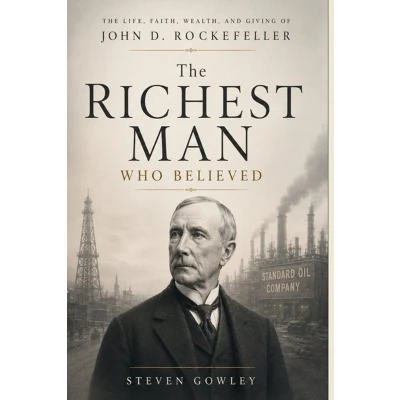
The Richest Man Who Believed traces the life of John D. Rockefeller not as a business titan, but as a man of faith whose belief in God shaped every major decision of his life, long before that faith had any fortune to prove it right.The book opens with his childhood, split between two very different influences: a father whose charm masked an absence, and a mother whose unshakeable Baptist faith gave the family its true foundation. From her, young John inherited a conviction that would define the rest of his life: that everything he had belonged to God first, and to him only as a steward.That conviction is put to the test almost immediately. At sixteen, working an unpaid position as a bookkeeper's assistant, Rockefeller begins tithing a tenth of his earnings before he has nearly enough to spare it, a habit he keeps meticulously recorded and never abandons, through poverty, through the early uncertain years of building what would become Standard Oil, and through the eventual accumulation of the largest personal fortune in American history.The book follows his marriage to a woman whose faith matched and strengthened his own, his private and largely unpublicized giving to churches and missions across the country, and the seasons of failure and public criticism that tested whether his belief was real or convenient. It does not shy away from the loss of his wife, a grief that could easily have hardened a man already accused by the press of having no heart at all, and instead traces how his faith held through it rather than around it.Throughout, the book contrasts the public caricature, the ruthless monopolist of newspaper cartoons, with the private man: someone who gave away hundreds of millions of dollars, often anonymously, to causes and individuals who never knew where the gift originated. It shows a man who saw his wealth not as an achievement to be defended, but as a talent entrusted to him, meant to be multiplied for others rather than hoarded for himself.The book closes not simply with his death, but with a direct turn toward the reader: the same God who met a poor young bookkeeper in 1855 has not changed. The invitation of the book is not to admire Rockefeller from a distance, but to recognize that the story began the same way every reader's story begins, with far less than the ending will eventually hold, and a choice about what to do with it in the meantime.At its heart, this is a book about the multiplying power of quiet, consistent faith, and a challenge to the reader: if God could do this for a man who started with nothing, what might He do with what you are willing to give Him now?
 Prijshistorie
* Prijshistorie bevat geen data van Amazon, Amazon Marketplace.
Prijzen voor het laatst bijgewerkt op:
 Gerelateerde resultaten
 Productspecificaties


