


€ 12,96 Gratis verzending

Uitgelicht
|
|
12,96 |
Naar shop
|

|
32,67 |
Naar shop
|
| VERGELIJK ALLE AANBIEDERS (2) | ||
 Beschrijving
Vergelijk aanbieders (2)
€ 12,96 Gratis verzending
€ 32,67 Gratis verzending
Winkels met andere maten
Beschrijving
(2)
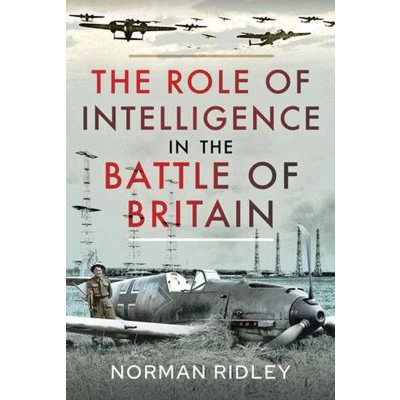
The Battle of Britain was fought between two airborne military elites and was a classic example of pure attack against pure defence. Though it was essentially a 'war of attrition', it was an engagement in which the gathering, assessment and reaction to intelligence played a significant role on both sides. In some respects, both the RAF and the Luftwaffe were hamstrung in their endeavours during the Battle of Britain by poor intelligence. The most egregious Luftwaffe blunder was its failure to appreciate the true nature of Fighter Command's operational systems and consequently it made fundamental strategic errors when evaluating its plans to degrade them. This was compounded by the Luftwaffe's Intelligence chief, Major Josef 'Beppo' Schmid, whose consistent underestimation of Fighter Command's capabilities had a huge negative impact upon Reichsmarschall Goering's decision-making at all stages of the conflict. Both the Luftwaffe and the RAF lacked detailed information about each other's war production capacity. While the Luftwaffe did have the benefit of pre-war aerial surveillance data it had been unable to update it significantly since the declaration of war in September 1939. Fighter Command did have an distinct advantage through its radar surveillance systems, but this was, in the early stages of the conflict at least, less than totally reliable and it was often difficult to interpret the data coming through due to the inexperience of many of its operators. Another promising source of intelligence was the interception of Luftwaffe communications. It is clear that the Luftwaffe was unable to use intelligence as a 'force multiplier', by concentrating resources effectively, and actually fell into a negative spiral where poor intelligence acted as a 'force diluter', thus wasting resources in strategically questionable areas. The British, despite being essentially unable to predict enemy intentions, did have the means, however imperfect, to respond quickly and effectively to each new strategic initiative rolled out by the Luftwaffe. The result of three years intensive research, in this book the author analyses the way in which both the British and German Intelligence services played a part in the Battle of Britain, thereby attempting to throw light on an aspect of the battle that has been hitherto underexposed to scrutiny.
BolThis in-depth WWII history examines how the Battle of Britain was shaped by military intelligence on both sides of the conflict. In the summer and fall of 1940, the UK successfully fended off a relentless German attack from the air. While the Battle of Britain was essentially a war of attrition, it was critically influenced at every stage by the gathering, assessment, and reaction to intelligence. In this fascinating study, military historian Norman Ridley examines all aspects of German and British intelligence, from the accuracy of its data to the effectiveness of its deployment. Both the Luftwaffe and the RAF lacked detailed information about each other's war production capacity. While the Luftwaffe did have pre-war aerial surveillance data, it was largely out of date by the time of the battle. Though RAF Fighter Command had a distinct advantage through its radar surveillance systems, the new technology wasn't totally reliable and often difficult to interpret. It also had the benefit of intercepting and decoding Luftwaffe communications. Rather than acting as a "force multiplier", the Luftwaffe's poor intelligence actually acted as a "force diluter", wasting resources in strategically questionable areas. On the other hand, the British had the means, however imperfect, to respond quickly and effectively to each new strategic initiative they faced.
 Productspecificaties
| EAN |
|
|---|---|
| Maat |
|
 Prijshistorie
 Prijzen voor het laatst bijgewerkt op:
 Gerelateerde resultaten


