


€ 321,00 Gratis verzending

Uitgelicht
|
|
321,00 |
Naar shop
|
| VERGELIJK ALLE AANBIEDERS (1) | ||
 Beschrijving
Vergelijk aanbieders (1)
€ 321,00 Gratis verzending
Winkels met andere maten
Beschrijving
(1)
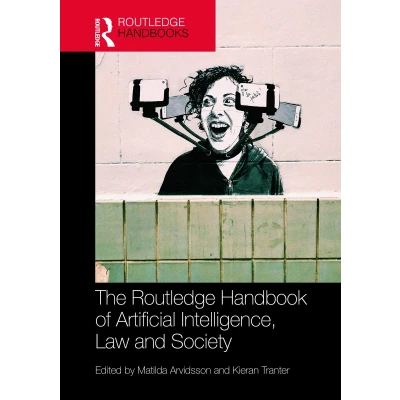
This handbook offers a critical and interdisciplinary analysis of the transformations that artificial intelligence (AI) is generating across law, politics, and society. This handbook offers a critical and interdisciplinary analysis of the transformations that artificial intelligence (AI) is generating across law, politics, and society. While much scholarship on AI focuses on ethics, governance, and compliance, this handbook considers broader questions about how AI reshapes legal institutions and knowledge, creates new forms of power and questions of legal subjectivity, and recasts human-other relations, while reinforcing colonial residues. Bringing together leading scholars from law and sociolegal studies, it approaches AI as a sociolegal formation that participates in the production of new forms of normativity, knowledge, and power, rather than just a technological object to be governed by law. There is a showcasing of diverse critical perspectives, including feminist, decolonial, Indigenous, posthuman, Marxist, and non-Western approaches. The contributors explore the complex entanglements of AI with contemporary legal, political and social life across themes such as democracy, justice, personhood, environmental governance, and colonialism, together with how legal fields such as intellectual property and international humanitarian law are challenged by AI. This volume provides an essential resource for scholars, students, and practitioners seeking to understand the social, political, and legal implications of AI and to imagine more just futures with, through, and beyond AI.
 Productspecificaties
| EAN |
|
|---|---|
| Maat |
|
 Prijshistorie
 Prijzen voor het laatst bijgewerkt op:
 Gerelateerde resultaten


