


€ 16,00 € 2,99 verzendkosten Totaal € 18,99

Uitgelicht
|
|
16,00 |
Naar shop
|

|
17,98 |
Naar shop
|
| VERGELIJK ALLE AANBIEDERS (2) | ||
 Beschrijving
Vergelijk aanbieders (2)
€ 16,00 € 2,99 verzendkosten Totaal € 18,99
€ 17,98 Gratis verzending
Winkels met andere maten
Beschrijving
(1)
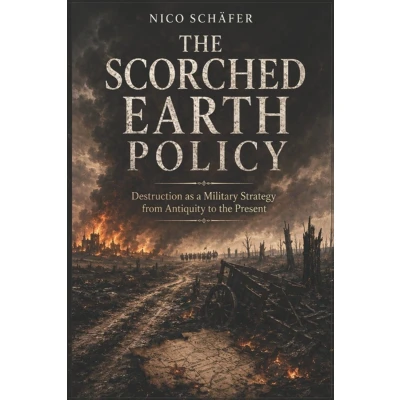
What happens when an army not only fights the enemy, but also destroys fields, supplies, cities and entire landscapes? The scorched earth policy is one of the oldest and at the same time most consequential strategies in the history of war. Their goal is to deprive the enemy of food, protection, freedom of movement and economic resources. But the military benefits of this strategy always came at a high price, which often had to be paid primarily by the civilian population. This book traces the development of scorched earth from antiquity to the present day. It shows how the Scythians let the Persian great king Darius run into the void, how Russia made the campaigns of Charles XII and Napoleon more difficult, and how Wellington defended Portugal through the lines of Torres Vedras. Other chapters deal with French colonial rule in Algeria, Sherman's march through Georgia, Sheridan's devastation of the Shenandoah Valley, the British concentration camps in the Boer War, the retreats of World War I, the Soviet strategy of 1941, Hitler's destruction orders, and the deployment of Agent Orange in Vietnam. The focus is not only on military operations, but also on the political interests, economic constraints and moral conflicts behind the decisions. Why were governments willing to sacrifice their own cities and supplies? When did the destruction actually serve the purpose of defence and when did it become a means of punishment, submission or expulsion? What consequences did the measures have for farmers, refugees, forced laborers and residents of occupied territories? The book is aimed at history buffs who want to get a comprehensible and at the same time well-founded overview of the topic. Military strategies, political backgrounds and historical contexts are vividly explained without presupposing prior scientific knowledge. It is not a special academic study, but an accessible account for readers who want to understand how the deliberate destruction of livelihoods influenced wars and shaped societies long after the fighting ended. A journey through more than two thousand years of war history and a penetrating examination of how far states will go to stop an opponent or enforce their rule.
 Prijshistorie
 * Prijshistorie bevat geen data van Amazon.
Prijzen voor het laatst bijgewerkt op:
 Gerelateerde resultaten
 Productspecificaties


