


€ 34,99 Gratis verzending

Uitgelicht
|
|
34,99 |
Naar shop
|

|
37,06 |
Naar shop
|
| VERGELIJK ALLE AANBIEDERS (2) | ||
 Beschrijving
Vergelijk aanbieders (2)
€ 34,99 Gratis verzending
€ 37,06 Gratis verzending
Winkels met andere maten
Beschrijving
(1)
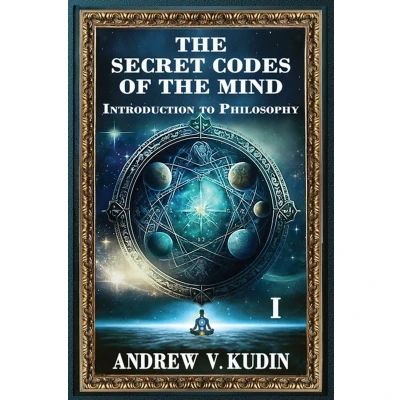
The Secret Codes of the Mind: Introduction to Philosophy is the revised and expanded second edition of Volume I of Andrew V. Kudin's six-volume academic textbook in philosophy. Built on decades of university teaching and research, this volume presents philosophy as a disciplined intellectual practice: a way of forming concepts, testing assumptions, clarifying arguments, and confronting the fundamental problems of reality, knowledge, value, reason, and freedom.Designed for college courses, general education programs, independent study, and serious readers, the book combines systematic structure with accessible prose. It presents major thinkers, texts, and historical contexts through the problems that give philosophy its force. Students encounter the history of philosophy as a field of living argument, where concepts are tested, positions are compared, and ideas become instruments of disciplined thought.Volume I contains five substantial lectures.Lecture 1 defines philosophy and examines its major branches: metaphysics, epistemology, ethics, aesthetics, logic, and political philosophy. The chapter shows how these fields shape inquiry beyond the classroom.Lecture 2 introduces major philosophical methods and their application to the art of living. Readers receive practical tools for interpretation, criticism, conceptual analysis, comparison, doubt, dialogue, and self-examination.Lecture 3 studies philosophical categories as instruments for ordering thought and experience. Being, causality, truth, unity, diversity, essence, relation, and change become part of a disciplined vocabulary for understanding the world.Lecture 4 explores the metaphysics of the universe through consciousness, matter, space, and time, tracing central questions from ancient cosmology through rationalist and modern debate.Lecture 5 examines freedom, determinism, responsibility, and illusion. It asks what it means to act, choose, deliberate, and remain accountable within conditions the individual did not create.The textbook is built for active study. Each lecture includes discussion questions, suggested readings, analytical exercises, and review material that can be used in the classroom or by independent readers. Its structure allows instructors to build a course around core philosophical problems while giving students a clear path from introductory understanding to serious analysis.This volume is suitable for introductory philosophy courses, critical thinking courses, humanities programs, and readers seeking a rigorous entrance into metaphysics, epistemology, logic, ethics, and the philosophical study of freedom. It offers an academically grounded beginning to the larger six-volume textbook.
 Prijshistorie
 * Prijshistorie bevat geen data van Amazon.
Prijzen voor het laatst bijgewerkt op:
 Gerelateerde resultaten
 Productspecificaties


