


€ 33,99 Gratis verzending

Uitgelicht
|
|
33,99 |
Naar shop
|

|
37,18 |
Naar shop
|

|
37,18 |
Naar shop
|
| VERGELIJK ALLE AANBIEDERS (3) | ||
 Beschrijving
Vergelijk aanbieders (3)
€ 33,99 Gratis verzending
€ 37,18 Gratis verzending
€ 37,18 Gratis verzending
Winkels met andere maten
Beschrijving
(1)
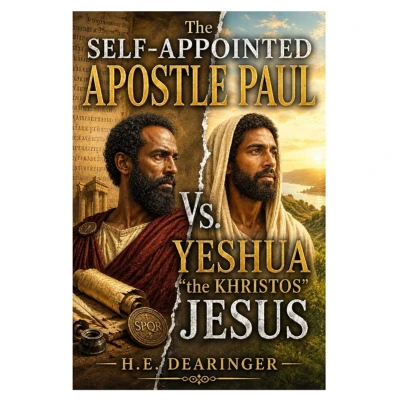
Who was really responsible for the shaping of Christianity? Was it Yeshua (Jesus) of Nazareth or was it the Self-Appointed Apostle Paul? Yeshua (Jesus) began a movement that transformed human history, but Paul became the voice that carried that movement beyond its Yehudi (Jewish) origins and into the wider world. Was Paul simply the messenger of Yeshua (Jesus), or did he redefine the faith in ways that created the Christianity we know today? In The Self-Appointed Apostle Paul Vs. Yeshua "the Khristos" Jesus readers are invited into a fascinating exploration of the relationship between the two most influential figures in Christian history. Through historical analysis, theological reflection, and scholarly debate, this book examines the life, teachings, and lasting impact of Yeshua (Jesus) and Paul, not, specifically as rivals, but as two essential forces in the development of Christianity. Yeshua (Jesus) provided the foundation, and Paul helped build the structure that carried that foundation across the world. Yeshua (Jesus) was the beginning of the story. Paul became its greatest interpreter. Together, they created one of the most influential movements in human history. This work, The Self-Appointed Apostle Paul Vs. Yeshua "the Khristos" Jesus, presents a structured theological and interpretive exploration of the two main foundational and influential voices within the Christian canonical tradition: the teachings attributed to Yeshua (Jesus) the Messiah (Khristos) and the writings associated with the apostle Paul. The purpose of this study is not to construct opposition for its own sake, nor to diminish either corpus of text, but to further examine the true relationship between the actual proclamation and then; later interpretation within the development of early Christian thought. Yeshua's (Jesus's) teachings were preserved primarily within narrative Gospel tradition, and are treated here as foundational proclamations; expressions of ethical instruction, Kingdom proclamation, and lived theological reality. Paul's writings, preserved in epistolary form, are treated as interpretive articulation; contextual theological reflection addressing the expansion, challenges, and doctrinal formation of early communities. Readers should understand this work as an interpretive exercise rather than a definitive doctrinal statement. It seeks to trace continuity and tension, convergence and divergence, proclamation and interpretation, without reducing the complexity of either Yeshua's (Jesus's) teachings or Paul's theology to a single fixed system.
 Prijshistorie
 * Prijshistorie bevat geen data van Amazon, Amazon Marketplace.
Prijzen voor het laatst bijgewerkt op:
 Gerelateerde resultaten
 Productspecificaties


