
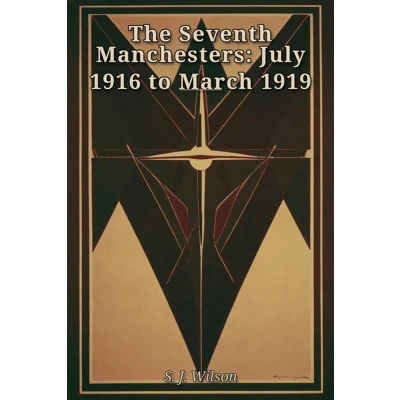
The Seventh Manchesters: July 1916 to March 1919
Uitgelicht

|
26,99 |
Naar shop
|

|
60,41 |
Naar shop
|

|
60,41 |
Naar shop
|
| VERGELIJK ALLE AANBIEDERS (3) | ||
 Beschrijving
Bol
olding up the Turk.In September, 1914, the 7th Bn. Manchester Regiment set out for active ser-vice in the East in goodly company, for they were a part of the 42nd (EastLancashire) Division, the first territorials to leave these shores during theGreat War. After many interesting days spent on garrison duty in the Su-dan and Lower Egypt they journeyed to Gallipoli soon after the landing hadbeen effected, and took a continuous part in that ill-fated campaign untilthe final evacuation. The beginning of 1916 thus found them back in Egypt,where they were taking part in General Maxwell's scheme for the defence ofthe Suez Canal. The things that befell the battalion during this long periodhave been admirably described in Major Hurst's book With Manchesters inthe East, and this short history will attempt to continue the narrative fromthe point where it left off.At the end of June, 1916, the 7th Manchesters made a short trip by rail alongthe Suez Canal, the last railway journey they were to make as a battalion formany a long day. The 42nd Division left the defence of the southern halfof the Canal in the able hands of the East Anglian Territorials, and jour-neyed north to the Kantara region. It was not definitely known why we3 S. J. WILSONmade this move, but there were persistent rumours that we were destinedfor France, where events were speeding towards a big battle. However, the7th detrained at Kantara and there met, for the first time since Gallipoli, the52nd (Lowland Scottish) Division. We knew very little of this coastal regionof the desert. Occasional stories had floated down to us to supplement thevery meagre official communiques as to events there, but it was recognisedas a place where opportunities of getting in touch with our invisible enemywere rather better than in the south. So it was felt that, even if we did not goto France, life would lose a certain amount of that deadly monotony whichwe had experienced for six months.It transpired that the 127th Brigade were to relieve detachments of the 11thDivision, who, it was openly whispered, were definitely to sail for France totry their luck in the more vigorous scene of this great adventure. Most in-teresting to us was the discovery that we were to take over posts occupied bythe11thManchesters, the firstKitchener battalion of our own regiment. Ourastonishment and delight can be imagined when we saw that they wore thegood old Fleur de Lys for a battalion flash on the puggarees of their helmets-just as we wore it, but yellow instead of green.The battalion marched east along a good road recently made for militarypurposes, and eventually reached Hill 70, where the headquarters were es-tablished. Early next morning, garrisons marched out before the heat of theda


 Beschrijving
(1)
Beschrijving
(1)
olding up the Turk.In September, 1914, the 7th Bn. Manchester Regiment set out for active ser-vice in the East in goodly company, for they were a part of the 42nd (EastLancashire) Division, the first territorials to leave these shores during theGreat War. After many interesting days spent on garrison duty in the Su-dan and Lower Egypt they journeyed to Gallipoli soon after the landing hadbeen effected, and took a continuous part in that ill-fated campaign untilthe final evacuation. The beginning of 1916 thus found them back in Egypt,where they were taking part in General Maxwell's scheme for the defence ofthe Suez Canal. The things that befell the battalion during this long periodhave been admirably described in Major Hurst's book With Manchesters inthe East, and this short history will attempt to continue the narrative fromthe point where it left off.At the end of June, 1916, the 7th Manchesters made a short trip by rail alongthe Suez Canal, the last railway journey they were to make as a battalion formany a long day. The 42nd Division left the defence of the southern halfof the Canal in the able hands of the East Anglian Territorials, and jour-neyed north to the Kantara region. It was not definitely known why we3 S. J. WILSONmade this move, but there were persistent rumours that we were destinedfor France, where events were speeding towards a big battle. However, the7th detrained at Kantara and there met, for the first time since Gallipoli, the52nd (Lowland Scottish) Division. We knew very little of this coastal regionof the desert. Occasional stories had floated down to us to supplement thevery meagre official communiques as to events there, but it was recognisedas a place where opportunities of getting in touch with our invisible enemywere rather better than in the south. So it was felt that, even if we did not goto France, life would lose a certain amount of that deadly monotony whichwe had experienced for six months.It transpired that the 127th Brigade were to relieve detachments of the 11thDivision, who, it was openly whispered, were definitely to sail for France totry their luck in the more vigorous scene of this great adventure. Most in-teresting to us was the discovery that we were to take over posts occupied bythe11thManchesters, the firstKitchener battalion of our own regiment. Ourastonishment and delight can be imagined when we saw that they wore thegood old Fleur de Lys for a battalion flash on the puggarees of their helmets-just as we wore it, but yellow instead of green.The battalion marched east along a good road recently made for militarypurposes, and eventually reached Hill 70, where the headquarters were es-tablished. Early next morning, garrisons marched out before the heat of theda
 Productspecificaties
 Prijshistorie
* Prijshistorie bevat geen data van Amazon, Amazon Marketplace.
Prijzen voor het laatst bijgewerkt op:
 Gerelateerde resultaten


