


€ 15,00 € 2,99 verzendkosten Totaal € 17,99

Gesponsorde links
|
|
15,00 |
Naar shop
|

|
15,65 |
Naar shop
|

|
15,65 |
Naar shop
|
| VERGELIJK ALLE AANBIEDERS (3) | ||
 Beschrijving
Vergelijk aanbieders (3)
Gesponsorde links · Sommige shops betalen ons een vergoeding
€ 15,00 € 2,99 verzendkosten Totaal € 17,99
€ 15,65 Gratis verzending
€ 15,65 Gratis verzending
Winkels met andere maten
Beschrijving
(1)
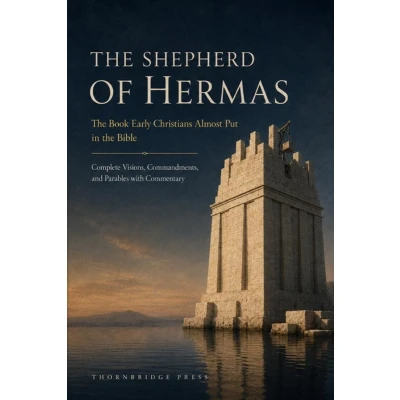
Read aloud in church for three hundred years. Then quietly left outside the canon. In the second century, a freed slave turned merchant in Rome began writing down visions he could not explain. An elderly woman who grew younger every time he saw her. A tower rising stone by stone out of deep water. An angel dressed as a shepherd who arrived with twelve commandments and ten parables, and stayed until the message was finished. His name was Hermas, and for the first three centuries of the church what he wrote carried extraordinary weight. It was copied into the Codex Sinaiticus alongside the Gospels. Irenaeus cited it as scripture. Origen believed the author was the same Hermas whom Paul greets at the close of his letter to the Romans. Congregations heard it read in worship. It was never condemned as false or dangerous. It was set aside only when the church narrowed its test for apostolic authority, and the testimony of a layman no longer qualified. What survives is the most human document to come out of the early church. Hermas is not a bishop handing down doctrine from a safe distance. He is a man who lost his fortune, whose household embarrassed him, who caught himself in a private thought and then could not stop hearing about it. His central question is the one that unsettled his entire generation and still unsettles readers now: what happens when you fail after you believed you had been forgiven. Inside this complete edition: - The Five Visions, from the first call to repentance through the arrival of the shepherd - The Twelve Mandates, covering faith, truth, purity, patience, self-control, doubt, sorrow, false prophets, and desire - The Ten Parables, including the elm and the vine, the true fast, the willow tree, and the mountains of the great field - Historical commentary opening every section, setting the scene in second-century Rome and explaining what each image meant to its first hearers - A timeline of early Christian writings, a glossary of key terms, and a guide to further reading The text is a carefully modernized rendering of public domain translations. Archaic grammar has been smoothed away and the meaning left untouched, so the work reads the way it was meant to be heard: plainly, urgently, and without a scholar standing between you and the page. The commentary makes no argument that this belongs in scripture. It presents the document for exactly what it is, a primary source from the generation immediately after the apostles, written by a man with no office to defend and nothing to gain. For readers of the apostolic fathers, students of church history, and anyone who has wondered what the early church was reading while the canon was still an open question.
 Prijshistorie
* Prijshistorie bevat geen data van Amazon, Amazon Marketplace.
Prijzen voor het laatst bijgewerkt op:
 Gerelateerde resultaten
 Productspecificaties


