

€ 9,19 Gratis verzending

Uitgelicht
|
|
9,19 |
Naar shop
|

|
9,19 |
Naar shop
|

|
10,50 |
Naar shop
|
| VERGELIJK ALLE AANBIEDERS (3) | ||
 Beschrijving
Vergelijk aanbieders (3)
€ 9,19 Gratis verzending
€ 9,19 Gratis verzending
€ 10,50 € 2,99 verzendkosten Totaal € 13,49
Winkels met andere maten
Beschrijving
(1)
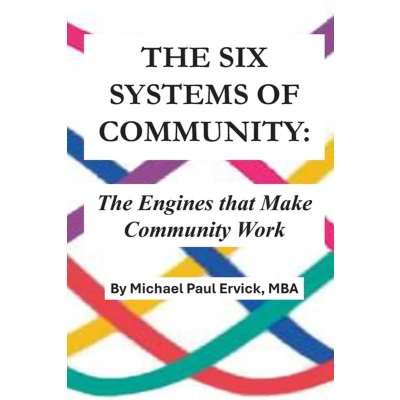
This book defines the structure beneath every functioning community. It does not begin with institutions. It does not begin with policy. It begins with function. Every strong community must develop capability, build relationships, organize participation, coordinate action, align behavior and sustain meaning. These are not optional. They are structural requirements. This book presents these functions as six interdependent systems: - Education - Social - Economic - Political - Cultural - Spiritual Individually, each system explains part of community life. Together, they explain how communities actually function-or fail. The purpose of this book is not to analyze each system in isolation. It is to show how they interact, where they create tension, how misalignment leads to failure and how alignment produces resilience. At the center of this framework is a critical insight: Communities do not succeed because systems exist. They succeed because systems align at the point of action. This book is designed for those who are responsible-formally or informally-for the well-being of a community; practitioners in disaster response; civic and nonprofit leaders; public servants; community organizers and anyone working where coordination, trust, and action matter. It is not a theoretical work. It is a practical lens. Because every community already operates through these systems. The question is whether they are visible, understood and strong enough to hold.
 Prijshistorie
 * Prijshistorie bevat geen data van Amazon, Amazon Marketplace.
Prijzen voor het laatst bijgewerkt op:
 Gerelateerde resultaten
 Productspecificaties


