
The Sixties
Uitgelicht

|
35,99 |
Naar shop
|
| VERGELIJK ALLE AANBIEDERS (1) | ||
 Beschrijving
Bol Partner
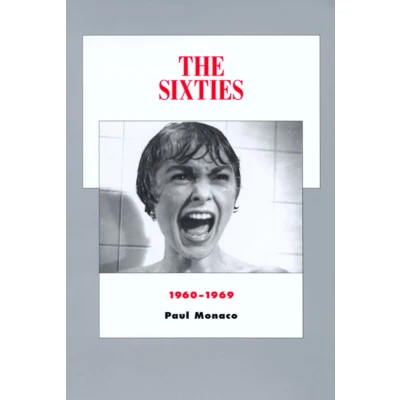
Amid the turbulence of political assassinations, the civil rights struggle, and antiwar protests, American society was experiencing growing affluence and profound cultural change during the 1960s. This text looks at the way in which the film industry interpreted the era. "I think this is a fine volume, one that maintains the high quality of other volumes in the series while making major contributions in its own right…a strong, well-argued and well-structured study."—Dana Polan, University of Southern California "Monaco is especially good at explaining economic and technical trends during the decade. He clearly and succinctly charts the major changes in modes of film exhibition, and he provides helpful accounts of new developments in cameras, lenses, color stock, sound recording, etc., in all cases showing how such things influenced film style. One feature of his book I particularly liked is the detailed attention he gives to the major stars of the decade, and to the groundbreaking directors and films."—James Naremore, author of More than Night: Film Noir in Its Contexts Amid the turbulence of political assassinations, the civil rights struggle, and antiwar protests, American society was experiencing growing affluence and profound cultural change during the 1960s. The film industry gradually redirected its energies, resulting in a distinctive break from traditional business and stylistic practice and emergence of a new "cinema of sensation." Feature films became faster-paced and more graphic, the antihero took his place alongside the classic Hollywood hero, and "downer" films like Midnight Cowboy proved as popular as those with upbeat fare. Paul Monaco gives a sweeping view of this exhilarating decade, ranging from the visceral sensation of Bonnie and Clyde, to the comic-book satire of Dr. Strangelove, to the youthful alienation of The Graduate.


Vergelijk aanbieders (1)

 Beschrijving
(1)
Beschrijving
(1)
Amid the turbulence of political assassinations, the civil rights struggle, and antiwar protests, American society was experiencing growing affluence and profound cultural change during the 1960s. This text looks at the way in which the film industry interpreted the era. "I think this is a fine volume, one that maintains the high quality of other volumes in the series while making major contributions in its own right…a strong, well-argued and well-structured study."—Dana Polan, University of Southern California "Monaco is especially good at explaining economic and technical trends during the decade. He clearly and succinctly charts the major changes in modes of film exhibition, and he provides helpful accounts of new developments in cameras, lenses, color stock, sound recording, etc., in all cases showing how such things influenced film style. One feature of his book I particularly liked is the detailed attention he gives to the major stars of the decade, and to the groundbreaking directors and films."—James Naremore, author of More than Night: Film Noir in Its Contexts Amid the turbulence of political assassinations, the civil rights struggle, and antiwar protests, American society was experiencing growing affluence and profound cultural change during the 1960s. The film industry gradually redirected its energies, resulting in a distinctive break from traditional business and stylistic practice and emergence of a new "cinema of sensation." Feature films became faster-paced and more graphic, the antihero took his place alongside the classic Hollywood hero, and "downer" films like Midnight Cowboy proved as popular as those with upbeat fare. Paul Monaco gives a sweeping view of this exhilarating decade, ranging from the visceral sensation of Bonnie and Clyde, to the comic-book satire of Dr. Strangelove, to the youthful alienation of The Graduate.
 Productspecificaties
| EAN |
|
|---|---|
| Maat |
|
 Prijshistorie
Prijzen voor het laatst bijgewerkt op:
 Gerelateerde resultaten


