


€ 20,46 € 2,99 verzendkosten Totaal € 23,45

Gesponsorde links
|
|
20,46 |
Naar shop
|

|
21,07 |
Naar shop
|

|
21,07 |
Naar shop
|
| VERGELIJK ALLE AANBIEDERS (3) | ||
 Beschrijving
Vergelijk aanbieders (3)
Gesponsorde links · Sommige shops betalen ons een vergoeding
€ 20,46 € 2,99 verzendkosten Totaal € 23,45
€ 21,07 Gratis verzending
€ 21,07 Gratis verzending
Winkels met andere maten
Beschrijving
(1)
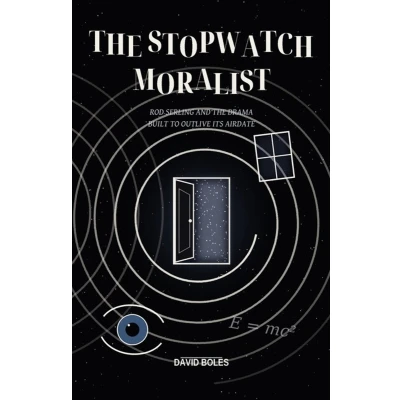
The live theatre of television burned its sets every night. Rod Serling built the machine that refused to burn.In 1955, a hit play could be performed only twice, and only if the network bought it again at full price. In 1956 and 1958, Serling tried to tell the Emmett Till story on live television and watched thirty readers sand it into another state, another decade, another people. There was no rerun, no archive, no appeal. He answered with engineering: an impossible premise stipulated in the opening minutes, an ending computed from character rather than lowered from a crane, and the author's face in the frame as a signature no sponsor could strip. He called the territory a fifth dimension. It has never closed.The Stopwatch Moralist is the story of that construction, told as an argument with evidence. The book follows the wound (the vapor economy of live television, the two sanded Till plays, the credit that crossed the screen in a fraction of a second), the workaround (the stipulation, the rerun, the house of pens), the price (the deed sold at the dawn of the rerun's empire), and the verdict (the forms that arrived for other writers a year and a half after the table in Rochester). At the center stands the book's signature instrument: the tally, all ninety-two endings Serling wrote for The Twilight Zone, each ruled in one line with its airdate.The count: 63 endings computed from character. 20 gimmicks. 5 nullifications. 4 lotteries. The cheats are named and dated. The charge is answered.For readers of The Twilight Zone Companion, for writers who want their endings earned, and for anyone who ever wondered why one drama from 1959 plays tonight while its betters sit in vaults.The god arrives early. The endings are earned. The door still opens.
 Prijshistorie
* Prijshistorie bevat geen data van Amazon, Amazon Marketplace.
Prijzen voor het laatst bijgewerkt op:
 Gerelateerde resultaten
 Productspecificaties


