


€ 15,00 € 2,99 verzendkosten Totaal € 17,99

Uitgelicht
|
|
15,00 |
Naar shop
|

|
15,78 |
Naar shop
|

|
15,78 |
Naar shop
|
| VERGELIJK ALLE AANBIEDERS (3) | ||
 Beschrijving
Vergelijk aanbieders (3)
€ 15,00 € 2,99 verzendkosten Totaal € 17,99
€ 15,78 Gratis verzending
€ 15,78 Gratis verzending
Winkels met andere maten
Beschrijving
(1)
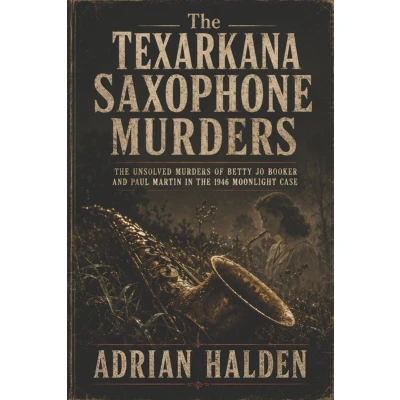
An unresolved murder case demands more than a legend.On April 14, 1946, fifteen-year-old Betty Jo Booker and sixteen-year-old Paul Martin were found dead after a night that had begun in ordinary Texarkana routine. Betty Jo had been playing saxophone at a late musical performance. Paul had picked her up afterward. By morning, their names were part of a case that would trouble two states, test investigators, and help shape one of America's most persistent true-crime mysteries.The Texarkana Saxophone Murders examines the Booker-Martin murders within the wider 1946 Moonlight case, but it does not treat the story as folklore or as a solved case in disguise. The book follows the known sequence from the last performance to the morning discoveries, the road, the car, the missing saxophone, the weapon evidence, and the pressure created by earlier attacks in the region.At the center of the account are Betty Jo Booker and Paul Martin-not the nickname later attached to the unknown attacker. Betty Jo's saxophone is considered not only as an investigative lead, but as an object connected to a young musician's life before it became evidence. Paul's discovery near North Park Road is treated not as a dramatic opening, but as the first human loss investigators had to confront before the full shape of the crime was known.The book also studies the institutional and public forces surrounding the case: Texarkana's divided Texas-Arkansas geography, overlapping law enforcement responsibility, reward pressure, rumor, armed citizens, newspaper language, and the way public fear turned an unknown offender into the figure remembered as the Phantom. It considers how a case can become famous while still leaving the legal record unfinished.A major suspect theory receives careful attention, including the role of Youell Swinney, reported statements attributed to Peggy Swinney, vehicle-related suspicion, and the limits of circumstantial pressure. But suspicion is not treated as conviction. The book keeps the central legal fact in view: no one was publicly convicted of murdering Betty Jo Booker and Paul Martin.Written as analytical true crime and historical cold-case nonfiction, The Texarkana Saxophone Murders offers an evidence-aware, victim-centered reading of a case often overshadowed by legend. It is a restrained investigation into what the record can support, what it cannot safely prove, and why the difference still matters.For readers interested in unsolved murders, historical true crime, public memory, and the difficult space between evidence and certainty, this book returns the focus to two young lives, a frightened border city, and a record that never reached final closure.
 Prijshistorie
 * Prijshistorie bevat geen data van Amazon, Amazon Marketplace.
Prijzen voor het laatst bijgewerkt op:
 Gerelateerde resultaten
 Productspecificaties


