


€ 13,00 € 2,99 verzendkosten Totaal € 15,99

Uitgelicht
|
|
13,00 |
Naar shop
|

|
13,66 |
Naar shop
|

|
13,66 |
Naar shop
|
| VERGELIJK ALLE AANBIEDERS (3) | ||
 Beschrijving
Vergelijk aanbieders (3)
€ 13,00 € 2,99 verzendkosten Totaal € 15,99
€ 13,66 Gratis verzending
€ 13,66 Gratis verzending
Winkels met andere maten
Beschrijving
(1)
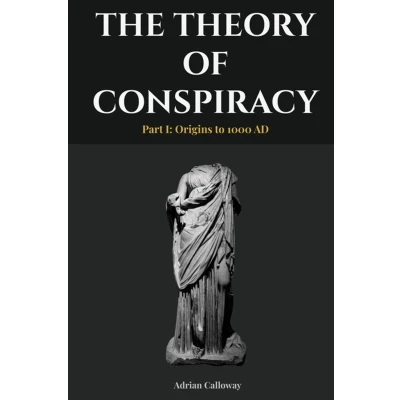
Before there were conspiracy theories, there were conspiracies.Long before the internet. Long before the printing press. Long before anyone had a word for it - human beings looked at the world around them and suspected they were not being told the truth.They were often right.The Theory of Conspiracy is a sweeping, rigorously researched history of conspiratorial thinking from its origins in prehistory through the year 1000 AD. Drawing on archaeology, cognitive science, political history, and the study of ancient texts, this book traces the oldest pattern in human civilization: the belief that power operates in secret, that official narratives conceal uncomfortable truths, and that events in the visible world are shaped by forces that prefer to remain unseen.This is not a book of fringe claims. It is a serious examination of a serious subject.Inside, you will discover: - How the earliest conspiracy narratives were written into the creation myths of Mesopotamia and Egypt - and what they reveal about how those civilizations actually operated- The real story behind some of history's most famous political crises: the assassination of Julius Caesar, the trial of Socrates, the fall of Rome, and the murder of Ali ibn Abi Talib- How the Roman Empire accused early Christians of secret cannibalism - and how early Christians used the same conspiracy logic against Rome- Why the Behistun Inscription of Darius I is one of the most sophisticated propaganda operations in the ancient world- What the Nag Hammadi texts - buried in the Egyptian desert for 1,600 years - reveal about what the early Christian church chose to hide- The Byzantine intelligence apparatus that turned political surveillance into an art form- How the Sunni-Shia split began with an assassination and a conspiracy theory that has never been fully resolved- Why the human brain is, by evolutionary design, a conspiracy-detecting machineSpanning prehistoric cave paintings to medieval Islamic courts, from Athenian democracy to the corridors of Constantinople, The Theory of Conspiracy: Part I argues that conspiratorial thinking is not a modern pathology or a sign of ignorance. It is one of the oldest and most persistent structures in human thought - shaped by power, fear, and the universal human experience of being governed by people who do not always tell the truth.The question was never whether conspiracies exist. The question is which ones are real.Part I of a multi-volume series. Each volume stands alone.
 Prijshistorie
 * Prijshistorie bevat geen data van Amazon, Amazon Marketplace.
Prijzen voor het laatst bijgewerkt op:
 Gerelateerde resultaten
 Productspecificaties


