

€ 47,75 Gratis verzending

Gesponsorde links
|
|
47,75 |
Naar shop
|

|
48,90 |
Naar shop
|
| VERGELIJK ALLE AANBIEDERS (2) | ||
 Beschrijving
Vergelijk aanbieders (2)
Gesponsorde links · Sommige shops betalen ons een vergoeding
€ 47,75 Gratis verzending
€ 48,90 Gratis verzending
Winkels met andere maten
Beschrijving
(1)
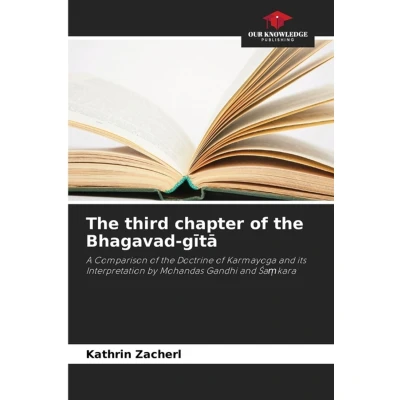
This thesis centres on the third chapter of the Bhagavadg¿t¿, arguably India's best-known philosophical and religious text, and its interpretation by ¿äkara and Mohandas Gandhi. In order to clarify Gandhi's specific interpretation of the Bhagavadg¿t¿, it is compared with ¿äkara's commentary. The Bhagavadg¿t¿bh¿¿ya, attributed to ¿äkara, is regarded as the oldest commentary still in existence today. It was probably composed between the late eighth and early ninth centuries AD. Owing to ¿äkara's great philosophical significance right up to modern times and his important role in the history of reception, his interpretation of the Bhagavadg¿t¿ provides an extremely interesting basis for comparison. The comparison is limited to three selected topics, namely the social system of the var¿as, karma and, finally, yajña. Following a basic introduction, the analysis draws on the author's own translation of the Bhagavadg¿t¿ verses and ¿äkara's commentary from Sanskrit, as well as Gandhi's English interpretation.
 Prijshistorie
* Prijshistorie bevat geen data van Amazon.
Prijzen voor het laatst bijgewerkt op:
 Gerelateerde resultaten
 Productspecificaties


