

€ 37,35 Gratis verzending

Uitgelicht
|
|
37,35 |
Naar shop
|

|
37,35 |
Naar shop
|

|
37,35 |
Naar shop
|
| VERGELIJK ALLE AANBIEDERS (3) | ||
 Beschrijving
Vergelijk aanbieders (3)
€ 37,35 Gratis verzending
€ 37,35 Gratis verzending
€ 37,35 Gratis verzending
Winkels met andere maten
Beschrijving
(1)
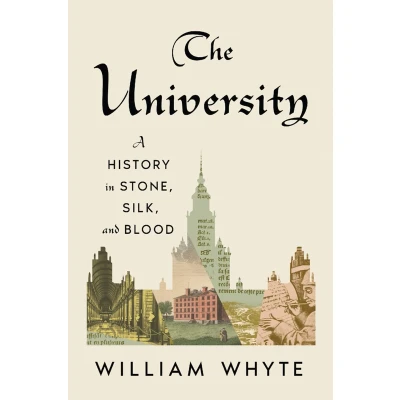
Universities are spaces for contemplation but also sociability and simply living. The University places materiality at the center of the institution’s 900-year history, tracing connections between the campus’s shifting physical realities—straw and stone, flesh and blood, concrete and iron—and the evolving cultural meanings of higher learning. A sweeping history of the buildings and materials that have shaped nine centuries of university life, from parchments and silk robes to glass atriums and sprawling parking lots.We often idealize the university as a sanctuary for disinterested reason, where material concerns are set aside in favor of higher principles. Yet when we remember our own college experiences, what springs to mind are not just lofty concepts but also material realities: cramped dorm rooms and musty library stacks, gothic towers and freshly mowed quads.The University puts such seemingly inconsequential details at the center of the institution’s 900-year history. Constructing each chapter around an emblematic material—straw, stone, flesh, blood, silk, paper, iron, and concrete—William Whyte traces the intimate connections between the university’s shifting physical form and its evolving social and cultural meanings. From the medieval University of Paris, where students purchased bundles of straw to use as chairs in otherwise-unfurnished classrooms, to the ocean of concrete at postcolonial Nigeria’s Obafemi Awolowo University, Whyte shows how competing visions of higher learning left their imprint on generations of university architecture, landscaping, and furniture. Along the way, he highlights perennial fears that, within the social space of the university, the life of the mind would recede before worldly interests: that student bloodlines would be tainted by racial intermixing, that courting donors with buildings named in their honor would become more important than research and education, that the allure of powdered wigs and silk gowns would undermine scholarly discipline.A richly textured chronicle, The University concludes that, even in the age of remote learning, the college campus is irreplaceable. The future of higher education includes fiber-optic cables, but stone, brick, and steel are here to stay.
 Prijshistorie
 * Prijshistorie bevat geen data van Amazon, Amazon Marketplace.
Prijzen voor het laatst bijgewerkt op:
 Gerelateerde resultaten
 Productspecificaties


