
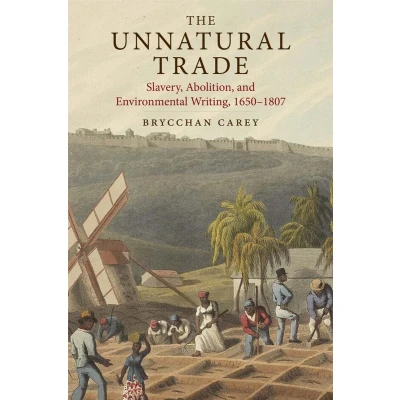
The Unnatural Trade
Uitgelicht

|
56,99 |
Naar shop
|
| VERGELIJK ALLE AANBIEDERS (1) | ||
 Beschrijving
Bol
A look at the origins of British abolitionism as a problem of eighteenth-century science, as well as one of economics and humanitarian sensibilities How did late eighteenth-century British abolitionists come to view the slave trade and British colonial slavery as unnatural, a “dread perversion” of nature? Focusing on slavery in the Americas, and the Caribbean in particular, alongside travelers’ accounts of West Africa, Brycchan Carey shows that before the mid-eighteenth century, natural histories were a primary source of information about slavery for British and colonial readers. These natural histories were often ambivalent toward slavery, but they increasingly adopted a proslavery stance to accommodate the needs of planters by representing slavery as a “natural” phenomenon. From the mid-eighteenth century, abolitionists adapted the natural history form to their own writings, and many naturalists became associated with the antislavery movement. Carey draws on descriptions of slavery and the slave trade created by naturalists and other travelers with an interest in natural history, including Richard Ligon, Hans Sloane, Griffith Hughes, Samuel Martin, and James Grainger. These environmental writings were used by abolitionists such as Anthony Benezet, James Ramsay, Thomas Clarkson, and Olaudah Equiano to build a compelling case that slavery was unnatural, a case that was popularized by abolitionist poets such as Thomas Day, Edward Rushton, Hannah More, and William Cowper.


Vergelijk aanbieders (1)

 Beschrijving
(1)
Beschrijving
(1)
A look at the origins of British abolitionism as a problem of eighteenth-century science, as well as one of economics and humanitarian sensibilities How did late eighteenth-century British abolitionists come to view the slave trade and British colonial slavery as unnatural, a “dread perversion” of nature? Focusing on slavery in the Americas, and the Caribbean in particular, alongside travelers’ accounts of West Africa, Brycchan Carey shows that before the mid-eighteenth century, natural histories were a primary source of information about slavery for British and colonial readers. These natural histories were often ambivalent toward slavery, but they increasingly adopted a proslavery stance to accommodate the needs of planters by representing slavery as a “natural” phenomenon. From the mid-eighteenth century, abolitionists adapted the natural history form to their own writings, and many naturalists became associated with the antislavery movement. Carey draws on descriptions of slavery and the slave trade created by naturalists and other travelers with an interest in natural history, including Richard Ligon, Hans Sloane, Griffith Hughes, Samuel Martin, and James Grainger. These environmental writings were used by abolitionists such as Anthony Benezet, James Ramsay, Thomas Clarkson, and Olaudah Equiano to build a compelling case that slavery was unnatural, a case that was popularized by abolitionist poets such as Thomas Day, Edward Rushton, Hannah More, and William Cowper.
 Productspecificaties
| EAN |
|
|---|---|
| Maat |
|
 Prijshistorie
Prijzen voor het laatst bijgewerkt op:
 Gerelateerde resultaten


