


€ 109,00 Gratis verzending

Gesponsorde links
|
|
109,00 |
Naar shop
|

|
117,49 |
Naar shop
|
| VERGELIJK ALLE AANBIEDERS (2) | ||
 Beschrijving
Vergelijk aanbieders (2)
Gesponsorde links · Sommige shops betalen ons een vergoeding
€ 109,00 Gratis verzending
€ 117,49 Gratis verzending
Winkels met andere maten
Beschrijving
(1)
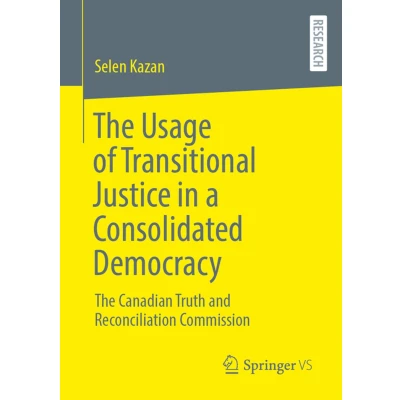
This book examines whether Canada’s Truth and Reconciliation Commission (TRC) — as a largely “classic” transitional justice mechanism — has been capable of producing meaningful change beyond symbolic recognition. This book examines whether Canada’s Truth and Reconciliation Commission (TRC) — as a largely “classic” transitional justice mechanism — has been capable of producing meaningful change beyond symbolic recognition. It asks how truth-telling, public acknowledgement of wrongdoing, and recommendations for reform translate into concrete political, legal, and societal transformation, and where the structural limits of this approach become visible. Canada constitutes an exceptional case for such an inquiry: unlike many contexts in which transitional justice is studied, it is a consolidated democracy with long-standing state institutions and a strong rule-of-law self-image. Against this backdrop, the dissertation analyses the TRC’s mandate, procedures, and Calls to Action, as well as patterns of implementation and non-implementation across political and institutional arenas. The study highlights the interaction between state actors, public discourse, and Indigenous agency, tracing how commitments to reconciliation are enabled, constrained, or deflected within established democratic structures.Building on these findings, the book refines how “reconciliation” can be assessed empirically and normatively and identifies the conditions under which transitional justice tools can contribute to deeper, longer-term change in democratic settings. It also engages the broader debate on whether and when more transformative approaches are required, drawing implications for future.
 Prijshistorie
* Prijshistorie bevat geen data van Amazon.
Prijzen voor het laatst bijgewerkt op:
 Gerelateerde resultaten
 Productspecificaties


