








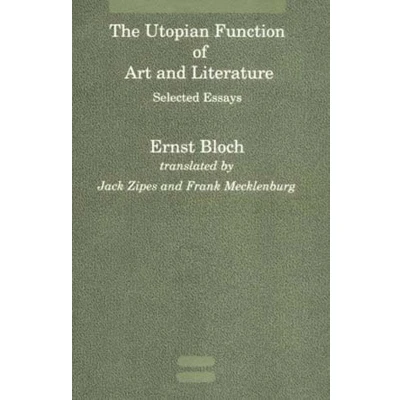
The Utopian Function of Art & Literature Selected Essays (Paper)
Uitgelicht

|
42,99
28,39 |
Naar shop
|
 Beschrijving
Bol
Essays in aesthetics by the philosopher Ernst Bloch that belong to the tradition of cultural criticism represented by Georg Lukacs, Theodor Adorno, and Walter Benjamin. The aesthetic essays of the philosopher Ernst Bloch (1885-1977) belong to the rich tradition of cultural criticism represented by Georg Lukacs, Theodor Adorno, and Walter Benjamin. Bloch was a significant creative source for these thinkers, and his impact is nowhere more evident than in writings on art. Bloch was fascinated with art as a reflection of both social realities and human dreams. Whether he is discussing architecture or detective novels, the theme that drives his work is always the same-the striving for something better, for a homeland that is more socially aware, more humane, more just. The book opens with an illuminating discussion between Bloch and Adorno on the meaning of utopia; then follow twelve essays written between 1930 and 1973 on topics such as aesthetic theory, genres such as music, painting, theater, film, opera, poetry, and the novel, and perhaps most important, popular culture in the form of fairy tales, detective stories, and dime novels. The MIT Press has previously published Ernst Bloch's Natural Law and Human Dignity and his magnum opus, The Principle of Hope. The Utopian Function of Art and Literature is included in the series Studies in Contemporary German Social Thought, edited by Thomas McCarthy.


Vergelijk aanbieders (1)

 Beschrijving
(1)
Beschrijving
(1)
Essays in aesthetics by the philosopher Ernst Bloch that belong to the tradition of cultural criticism represented by Georg Lukacs, Theodor Adorno, and Walter Benjamin. The aesthetic essays of the philosopher Ernst Bloch (1885-1977) belong to the rich tradition of cultural criticism represented by Georg Lukacs, Theodor Adorno, and Walter Benjamin. Bloch was a significant creative source for these thinkers, and his impact is nowhere more evident than in writings on art. Bloch was fascinated with art as a reflection of both social realities and human dreams. Whether he is discussing architecture or detective novels, the theme that drives his work is always the same-the striving for something better, for a homeland that is more socially aware, more humane, more just. The book opens with an illuminating discussion between Bloch and Adorno on the meaning of utopia; then follow twelve essays written between 1930 and 1973 on topics such as aesthetic theory, genres such as music, painting, theater, film, opera, poetry, and the novel, and perhaps most important, popular culture in the form of fairy tales, detective stories, and dime novels. The MIT Press has previously published Ernst Bloch's Natural Law and Human Dignity and his magnum opus, The Principle of Hope. The Utopian Function of Art and Literature is included in the series Studies in Contemporary German Social Thought, edited by Thomas McCarthy.
 Productspecificaties
| EAN |
|
|---|---|
| Maat |
|
 Prijshistorie
Prijzen voor het laatst bijgewerkt op:
 Gerelateerde resultaten


