


€ 25,69 Gratis verzending

Uitgelicht
|
|
25,69 |
Naar shop
|

|
27,46 |
Naar shop
|
| VERGELIJK ALLE AANBIEDERS (2) | ||
 Beschrijving
Vergelijk aanbieders (2)
€ 25,69 Gratis verzending
€ 27,46 Gratis verzending
Winkels met andere maten
Beschrijving
(1)
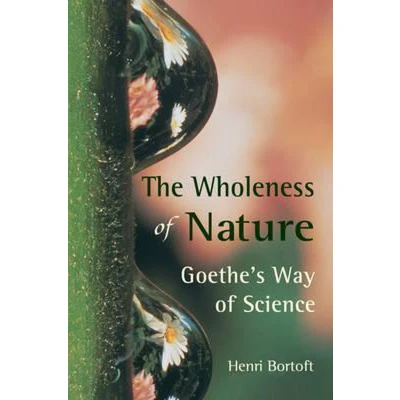
Examines the phenomenological and cultural roots of Goethe's approach to science, and argues that Goethe's insights represent the foundation for a future science of nature. The scientific work of Johann Wolfgang von Goethe (1749-1832) represents a style of learning and understanding which is largely ignored today. Modern science tends to break objects down in a purely analytical way; by contrast, Goethe was interested in the 'whole' of a phenomenon, and in particular the relationship between the object and the observer.In this illuminating study, Henri Bortoft examines the phenomenological and cultural roots of Goethe's approach to science. He argues that Goethe's insights, far from belonging to the past, represent the foundation for a future science respectful of nature.
 Prijshistorie
 * Prijshistorie bevat geen data van Amazon.
Prijzen voor het laatst bijgewerkt op:
 Gerelateerde resultaten
 Productspecificaties


