
the Wise Man of His Generation: Life Chacham Tzvi
Uitgelicht

|
14,19
13,00 |
Naar shop
|

|
14,00 |
Naar shop
|

|
14,00 |
Naar shop
|
| VERGELIJK ALLE AANBIEDERS (3) | ||
 Beschrijving
Bol
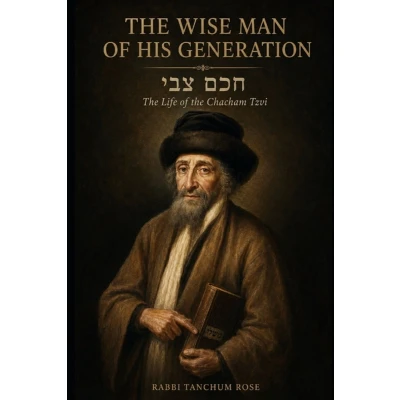
A young woman brought her rabbi a chicken with no heart. His answer would still be argued over three hundred years later, in hospital rooms he could never have imagined.The Chacham Tzvi was one of the most brilliant and most uncompromising minds in the history of Jewish law. Born into a world still bleeding from catastrophe, he earned the Sephardic title of "wise man" while barely more than a boy, buried his first family in the rubble of a siege, and served as rabbi in a dozen communities across two continents. He was welcomed into some cities like royalty and driven out of others under threat of death. And through all of it he refused, again and again, to do the one thing that would have made his life easy: bend.When a chicken was found with no heart, the safe ruling was to forbid it. He reasoned instead that no creature lives a moment without a heart, declared it kosher, and then, when his colleagues pushed back, wrote a responsum that reached down to the deepest question of all: what makes a body alive? That ruling is cited today in the fiercest debates over the definition of death and the ethics of organ transplantation.He refused a fortune in salary so no community could ever own his rulings. He hunted a hidden heretic through the streets of Amsterdam and was banned, threatened, and exiled for being right. He would not even sit for his own portrait, though his son said the finished likeness lacked only the breath of life.The Wise Man of His Generation is the deeply researched story of a man who decided, early and absolutely, that integrity was the only thing worth keeping, and who paid for that decision across sixty-two years and more loss than most men could survive. It is a portrait of genius, courage, and the price of standing alone.


 Beschrijving
(1)
Beschrijving
(1)
A young woman brought her rabbi a chicken with no heart. His answer would still be argued over three hundred years later, in hospital rooms he could never have imagined.The Chacham Tzvi was one of the most brilliant and most uncompromising minds in the history of Jewish law. Born into a world still bleeding from catastrophe, he earned the Sephardic title of "wise man" while barely more than a boy, buried his first family in the rubble of a siege, and served as rabbi in a dozen communities across two continents. He was welcomed into some cities like royalty and driven out of others under threat of death. And through all of it he refused, again and again, to do the one thing that would have made his life easy: bend.When a chicken was found with no heart, the safe ruling was to forbid it. He reasoned instead that no creature lives a moment without a heart, declared it kosher, and then, when his colleagues pushed back, wrote a responsum that reached down to the deepest question of all: what makes a body alive? That ruling is cited today in the fiercest debates over the definition of death and the ethics of organ transplantation.He refused a fortune in salary so no community could ever own his rulings. He hunted a hidden heretic through the streets of Amsterdam and was banned, threatened, and exiled for being right. He would not even sit for his own portrait, though his son said the finished likeness lacked only the breath of life.The Wise Man of His Generation is the deeply researched story of a man who decided, early and absolutely, that integrity was the only thing worth keeping, and who paid for that decision across sixty-two years and more loss than most men could survive. It is a portrait of genius, courage, and the price of standing alone.
 Productspecificaties
 Prijshistorie
* Prijshistorie bevat geen data van Amazon, Amazon Marketplace.
Prijzen voor het laatst bijgewerkt op:
 Gerelateerde resultaten


