


€ 18,00 € 2,99 verzendkosten Totaal € 20,99

Uitgelicht
|
|
18,00 |
Naar shop
|

|
18,36 |
Naar shop
|

|
18,36 |
Naar shop
|
| VERGELIJK ALLE AANBIEDERS (3) | ||
 Beschrijving
Vergelijk aanbieders (3)
€ 18,00 € 2,99 verzendkosten Totaal € 20,99
€ 18,36 Gratis verzending
€ 18,36 Gratis verzending
Winkels met andere maten
Beschrijving
(1)
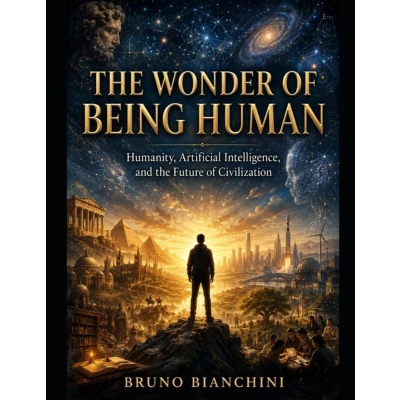
As artificial intelligence transforms every aspect of society, humanity faces a profound question: If machines become smarter, faster, and more capable than humans in many domains, what will remain uniquely human?The Wonder of Being Human explores this defining question of the twenty-first century. Combining philosophy, history, technology, ethics, economics, politics, and human psychology, the book examines the opportunities and dangers created by the AI revolution and argues that the future of civilization depends not on technological progress alone, but on our ability to cultivate wisdom, meaning, and moral responsibility.The journey begins by tracing humanity's greatest revolutions-from agriculture and industry to the digital era and artificial intelligence-showing how each expansion of power has created both prosperity and new risks. The book then investigates the nature of human identity, consciousness, creativity, dignity, and freedom, asking whether these qualities can ever be reduced to algorithms or replicated by machines.Moving beyond theory, the author analyzes the real-world impact of AI on work, education, democracy, economic systems, social relationships, privacy, and global security. Topics such as automation, surveillance, digital monopolies, misinformation, attention economies, and the future of employment are explored through a human-centered lens. Rather than embracing either technological utopianism or apocalyptic fear, the book offers a balanced assessment of AI's capabilities and limitations.At its heart, The Wonder of Being Human argues that modern civilization suffers from a growing crisis of meaning. Despite unprecedented wealth, knowledge, and connectivity, many people experience loneliness, anxiety, fragmentation, and a loss of purpose. Artificial intelligence may amplify these challenges unless societies intentionally place human flourishing at the center of technological development.The final sections present a hopeful vision for the future: a civilization that uses technology as a tool rather than a master; an economy that serves people rather than reducing them to productivity metrics; educational systems that cultivate wisdom as well as knowledge; and political institutions that protect freedom, dignity, and truth in the digital age.Ultimately, this book is both a warning and an invitation. It challenges readers to reflect on what makes human beings valuable, what kind of future we wish to create, and how we can ensure that technological power remains guided by ethical purpose. In an age of intelligent machines, the most important task may be rediscovering what it truly means to be human.
 Prijshistorie
 * Prijshistorie bevat geen data van Amazon, Amazon Marketplace.
Prijzen voor het laatst bijgewerkt op:
 Gerelateerde resultaten
 Productspecificaties


