
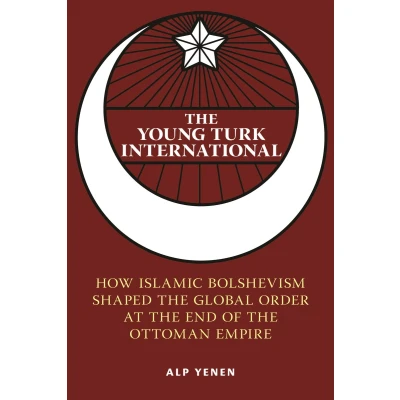
the Young Turk International: How Islamic Bolshevism Shaped Global Order at End of Ottoman Empire
Uitgelicht

|
139,00 |
Naar shop
|
| VERGELIJK ALLE AANBIEDERS (1) | ||
 Beschrijving
Bol
Alp Yenen tells the story of a group of exiled “Young Turk” leaders—fugitive Ottoman statesmen wanted as war criminals for the Armenian Genocide—who sought to capitalize on the global moment of Muslim internationalism after World War I to challenge European hegemony. The Great War ended with the Ottoman Empire’s defeat, its remaining territories destined for partition at the Paris Peace Conference. However, this settlement was complicated by a global moment of Muslim internationalism, as revolutions, revolts, and wars of independence swept across the Muslim world. Muslim internationalists resisted European imperialism, demanded self-determination, envisioned federations, and sought anticolonial alliances with Soviet Russia. Amid this crisis of empire, European powers grew alarmed by the specter of “Islamic Bolshevism”—any ideological, incidental, or imagined alignment between Muslim anticolonial movements and communism—which they saw as a threat to global order. Alp Yenen tells the story of a group of exiled “Young Turk” leaders—fugitive Ottoman statesmen wanted as war criminals for the Armenian Genocide—who sought to seize this moment by founding the Union of Muslim Revolutionary Societies. This “Young Turk International” connected Muslim revolutionaries with German revisionists and Russian Bolsheviks, forging transnational networks with Arabs and Indians and international alliances with Turkey, Iran, and Afghanistan to challenge European hegemony. Although their efforts ultimately failed, their story illuminates the lost possibilities of Muslim internationalism and the emergence of the post-Ottoman political landscape. Beyond this movement’s spectacular rise and fall between 1918 and 1922, this book explores how imperial security discourses, the agency of nonstate actors, and the consolidation of state hegemony shaped the global order. Based on extensive research in private papers and state archives, The Young Turk International offers a new global history of the post–World War I peace settlement.


Vergelijk aanbieders (1)

 Beschrijving
(1)
Beschrijving
(1)
Alp Yenen tells the story of a group of exiled “Young Turk” leaders—fugitive Ottoman statesmen wanted as war criminals for the Armenian Genocide—who sought to capitalize on the global moment of Muslim internationalism after World War I to challenge European hegemony. The Great War ended with the Ottoman Empire’s defeat, its remaining territories destined for partition at the Paris Peace Conference. However, this settlement was complicated by a global moment of Muslim internationalism, as revolutions, revolts, and wars of independence swept across the Muslim world. Muslim internationalists resisted European imperialism, demanded self-determination, envisioned federations, and sought anticolonial alliances with Soviet Russia. Amid this crisis of empire, European powers grew alarmed by the specter of “Islamic Bolshevism”—any ideological, incidental, or imagined alignment between Muslim anticolonial movements and communism—which they saw as a threat to global order. Alp Yenen tells the story of a group of exiled “Young Turk” leaders—fugitive Ottoman statesmen wanted as war criminals for the Armenian Genocide—who sought to seize this moment by founding the Union of Muslim Revolutionary Societies. This “Young Turk International” connected Muslim revolutionaries with German revisionists and Russian Bolsheviks, forging transnational networks with Arabs and Indians and international alliances with Turkey, Iran, and Afghanistan to challenge European hegemony. Although their efforts ultimately failed, their story illuminates the lost possibilities of Muslim internationalism and the emergence of the post-Ottoman political landscape. Beyond this movement’s spectacular rise and fall between 1918 and 1922, this book explores how imperial security discourses, the agency of nonstate actors, and the consolidation of state hegemony shaped the global order. Based on extensive research in private papers and state archives, The Young Turk International offers a new global history of the post–World War I peace settlement.
 Productspecificaties
| EAN |
|
|---|---|
| Maat |
|
 Prijshistorie
Prijzen voor het laatst bijgewerkt op:
 Gerelateerde resultaten


