


€ 16,00 € 2,99 verzendkosten Totaal € 18,99

Gesponsorde links
|
|
16,00 |
Naar shop
|

|
17,98 |
Naar shop
|

|
17,98 |
Naar shop
|
| VERGELIJK ALLE AANBIEDERS (3) | ||
 Beschrijving
Vergelijk aanbieders (3)
Gesponsorde links · Sommige shops betalen ons een vergoeding
€ 16,00 € 2,99 verzendkosten Totaal € 18,99
€ 17,98 Gratis verzending
€ 17,98 Gratis verzending
Winkels met andere maten
Beschrijving
(1)
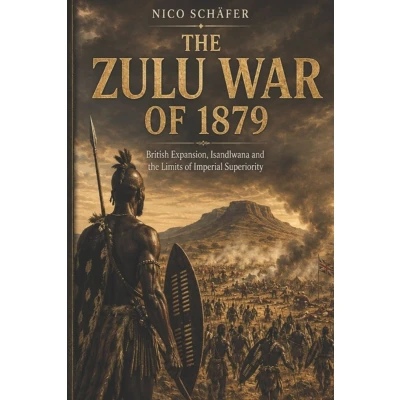
How could an African army inflict a crushing defeat on one of the most powerful military powers of its time? Why did Britain invade the independent Zulu Kingdom in the first place? And why did the spectacular victory of the Zulu at Isandlwana nevertheless end with the destruction of their state? This book offers a comprehensible and at the same time well-founded overview of the Zulu War of 1879. It is aimed at history buffs who want to learn about the political background, military decisions and long-term consequences of the conflict without having to work their way through a special scientific study. The account begins with the emergence of the Zulu Kingdom and the political development of southern Africa in the 19th century. It explains Cetshwayo's rule, British expansionist policies, the conflict with the Transvaal, and the controversial ultimatum of December 1878 that eventually led to war. The different military systems of both sides, Chelmsford's invasion and the famous battles of Isandlwana and Rorke's Drift are dealt with in detail. Lesser-known but decisive events such as Eshowe, Hlobane, Kambula, Gingindlovu and the British advance on Ulundi are also clearly classified. The focus is not only on the question of what happened, but above all on why those involved acted in this way. The book shows why the British initially overestimated their technical superiority, how the Zulu used their mobility and tactical organization, and why Britain nevertheless had the resources to continue the war after heavy defeats. The political side of the conflict is also considered in detail. Was Cetshwayo really the aggressive ruler he was portrayed as in parts of the British public? What were the interests of Sir Bartle Frere and Lord Chelmsford? What role did British ideas of security, imperial order and regional dominance play? And why did the British victory not immediately lead to peace and stability? The view therefore does not end with the Battle of Ulundi. The capture of Cetshwayo, the partition of Zululand, the ensuing internal struggles and the subsequent British annexation show how profoundly the war changed the political order of southern Africa. A book about imperial power and its limits, about military hubris, extraordinary victories and the question of why technological superiority alone does not guarantee success. >Parts of the text have been revised with the support of artificial intelligence. It was used as a tool in structuring, research and linguistic elaboration. The contents have been carefully edited, historically classified and checked for factual consistency. In this way, the book combines modern working methods with the claim to offer a serious, understandable and high-quality presentation.
 Prijshistorie
* Prijshistorie bevat geen data van Amazon, Amazon Marketplace.
Prijzen voor het laatst bijgewerkt op:
 Gerelateerde resultaten
 Productspecificaties


