
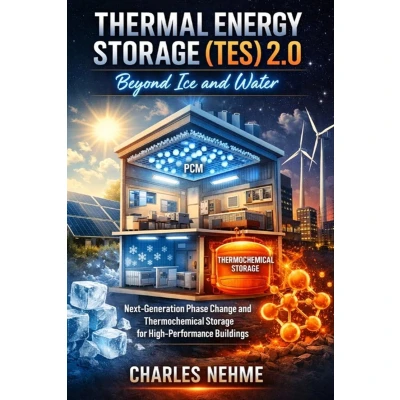
Thermal Energy Storage (TES) 2.0: Beyond Ice and Water: Next Generation Phase Change Thermochemical for High Performance Buildings
Uitgelicht

|
29,99 |
Naar shop
|

|
31,66 |
Naar shop
|
| VERGELIJK ALLE AANBIEDERS (2) | ||
 Beschrijving
Bol
For decades, Thermal Energy Storage (TES) in buildings meant one thing: large tanks of water or ice charged at night and discharged during the day. It was a clever solution for time-of-use electricity tariffs and chiller downsizing, but it remained limited to sensible heat storage and bulky infrastructure that only certain projects could justify.Today, the energy landscape has fundamentally changed.Electrical grids are under stress from renewable energy intermittency. Peak demand charges are rising. Buildings are expected not only to consume less energy but also to interact intelligently with the grid. Net-zero targets, decarbonization mandates, and smart building technologies are transforming how engineers must think about HVAC systems.In this new reality, traditional TES is no longer enough.A new generation of materials and methods-Phase Change Materials (PCMs) and thermochemical storage-is redefining what thermal storage means. Storage is no longer confined to tanks in plant rooms. It can be embedded into walls, ceilings, air systems, and equipment. It can behave like a thermal battery, charging when energy is abundant and cheap, and discharging when the grid is stressed and electricity is expensive.This book introduces what can be called TES 2.0.TES 2.0 is not about ice. It is not about water. It is about turning buildings into active participants in energy management by storing cooling and heating capacity within the building fabric itself. It is about peak shaving, renewable integration, demand response, and grid resilience. Most importantly, it is about giving engineers new tools to design buildings that are ready for the future energy ecosystem.Despite its enormous potential, this topic is still poorly understood in mainstream HVAC practice. Many engineers, consultants, and designers are unaware that these technologies are already available and practical. This book aims to bridge that gap by explaining the science, the applications, the design methodologies, and the practical integration of next-generation thermal storage into modern buildings.The goal is simple: To help engineers and building professionals understand how to design buildings that store energy thermally, reduce electrical peaks, and work in harmony with renewable and unstable grids.


 Beschrijving
(1)
Beschrijving
(1)
For decades, Thermal Energy Storage (TES) in buildings meant one thing: large tanks of water or ice charged at night and discharged during the day. It was a clever solution for time-of-use electricity tariffs and chiller downsizing, but it remained limited to sensible heat storage and bulky infrastructure that only certain projects could justify.Today, the energy landscape has fundamentally changed.Electrical grids are under stress from renewable energy intermittency. Peak demand charges are rising. Buildings are expected not only to consume less energy but also to interact intelligently with the grid. Net-zero targets, decarbonization mandates, and smart building technologies are transforming how engineers must think about HVAC systems.In this new reality, traditional TES is no longer enough.A new generation of materials and methods-Phase Change Materials (PCMs) and thermochemical storage-is redefining what thermal storage means. Storage is no longer confined to tanks in plant rooms. It can be embedded into walls, ceilings, air systems, and equipment. It can behave like a thermal battery, charging when energy is abundant and cheap, and discharging when the grid is stressed and electricity is expensive.This book introduces what can be called TES 2.0.TES 2.0 is not about ice. It is not about water. It is about turning buildings into active participants in energy management by storing cooling and heating capacity within the building fabric itself. It is about peak shaving, renewable integration, demand response, and grid resilience. Most importantly, it is about giving engineers new tools to design buildings that are ready for the future energy ecosystem.Despite its enormous potential, this topic is still poorly understood in mainstream HVAC practice. Many engineers, consultants, and designers are unaware that these technologies are already available and practical. This book aims to bridge that gap by explaining the science, the applications, the design methodologies, and the practical integration of next-generation thermal storage into modern buildings.The goal is simple: To help engineers and building professionals understand how to design buildings that store energy thermally, reduce electrical peaks, and work in harmony with renewable and unstable grids.
 Productspecificaties
 Prijshistorie
* Prijshistorie bevat geen data van Amazon.
Prijzen voor het laatst bijgewerkt op:
 Gerelateerde resultaten


