


€ 96,80 Gratis verzending

Uitgelicht
|
|
96,80 |
Naar shop
|

|
109,46 |
Naar shop
|
| VERGELIJK ALLE AANBIEDERS (2) | ||
 Beschrijving
Vergelijk aanbieders (2)
€ 96,80 Gratis verzending
€ 109,46 € 3,14 verzendkosten Totaal € 112,60
Winkels met andere maten
Beschrijving
(1)
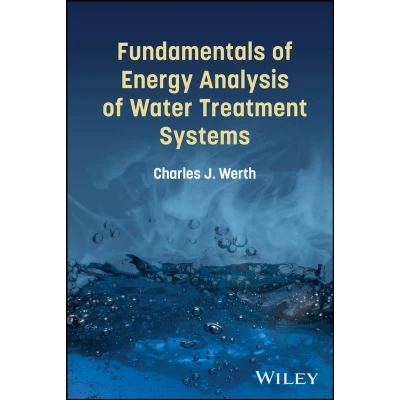
Apply thermodynamic principles to calculate energy demands in water treatment Designing energy-efficient water treatment systems requires quantitative methods that most engineering curricula fail to provide. Fundamentals of Energy Analysis of Water Treatment Systems delivers the first dedicated textbook connecting thermodynamic fundamentals to water treatment energy calculations. Charles J. Werth, a recognized authority in environmental engineering with over 170 publications, presents a systematic approach for analyzing energy requirements across treatment technologies. The book covers the First, Second, and Third Laws of Thermodynamics through the lens of water treatment applications. Engineers learn to calculate internal energy, enthalpy, entropy, and Gibbs free energy for both closed and open systems. Chapters address energy analysis of membrane desalination, thermal distillation, electrodialysis, and electrochemical oxidation processes with worked examples throughout. Readers will also find: Energy balance calculations for reverse osmosis, multi-stage flash distillation, and electrodialysis systems with step-by-step worked examples Methods for quantifying thermodynamic efficiency of treatment technologies to improve design decisions and reduce operational costs End-of-chapter problems enabling students to apply principles to realistic water treatment scenarios and energy optimization challenges Modular chapter structure supporting standalone thermodynamics courses or integration into water-energy electives at multiple levels Direct connections between theoretical principles and real-world sustainability goals in water infrastructure design and assessment Environmental engineers, civil engineering students, and water treatment professionals will find this textbook indispensable for energy-aware design. Whether used in upper-undergraduate thermodynamics courses, a graduate water-energy course, or as a professional reference, this resource provides a quantitative foundation for sustainable treatment system development. Apply thermodynamic principles to calculate energy demands in water treatment Designing energy-efficient water treatment systems requires quantitative methods that most engineering curricula fail to provide. Fundamentals of Energy Analysis of Water Treatment Systems delivers the first dedicated textbook connecting thermodynamic fundamentals to water treatment energy calculations. Charles J. Werth, a recognized authority in environmental engineering with over 170 publications, presents a systematic approach for analyzing energy requirements across treatment technologies. The book covers the First, Second, and Third Laws of Thermodynamics through the lens of water treatment applications. Engineers learn to calculate internal energy, enthalpy, entropy, and Gibbs free energy for both closed and open systems. Chapters address energy analysis of membrane desalination, thermal distillation, electrodialysis, and electrochemical oxidation processes with worked examples throughout. Readers will also find: Energy balance calculations for reverse osmosis, multi-stage flash distillation, and electrodialysis systems with step-by-step worked examples Methods for quantifying thermodynamic efficiency of treatment technologies to improve design decisions and reduce operational costs End-of-chapter problems enabling students to apply principles to realistic water treatment scenarios and energy optimization challenges Modular chapter structure supporting standalone thermodynamics courses or integration into water-energy electives at multiple levels Direct connections between theoretical principles and real-world sustainability goals in water infrastructure design and assessment Environmental engineers, civil engineering students, and water treatment professionals will find this textbook indispensable for energy-aware design. Whether used in upper-undergraduate thermodynamics courses, a graduate water-energy course, or as a professional reference, this resource provides a quantitative foundation for sustainable treatment system development.
 Prijshistorie
 * Prijshistorie bevat geen data van Amazon.
Prijzen voor het laatst bijgewerkt op:
 Gerelateerde resultaten
 Productspecificaties


