


€ 76,99 Gratis verzending

Uitgelicht
|
|
76,99 |
Naar shop
|
| VERGELIJK ALLE AANBIEDERS (1) | ||
 Beschrijving
Vergelijk aanbieders (1)
€ 76,99 Gratis verzending
Winkels met andere maten
Beschrijving
(1)
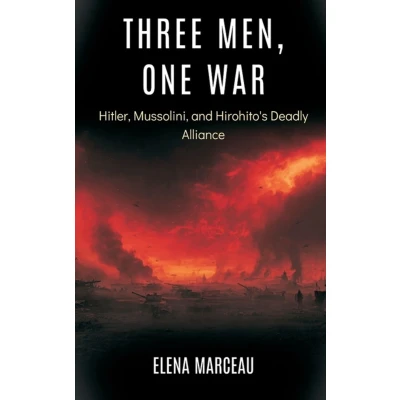
At the height of the Second World War, the Axis looked terrifyingly coherent: three flags, three capitals, one apparent purpose. Yet Hitler, Mussolini and Hirohito never forged a single war plan, never created a joint command and rarely trusted each other. Three Men, One War: Hitler, Mussolini, and Hirohito's Deadly Alliance peels back the appearance of unity to show a coalition stitched together by fear and opportunity rather than a shared design. It treats the axis alliance not as a dark mirror of Allied cooperation, but as a revealing case of how ambitious leaders try - and often fail - to bend partners to their own projects.Drawing on political and military history, as well as alliance theory and the study of authoritarian rule, Elena Marceau follows the three regimes from interwar grievance to catastrophic defeat. She compares their ideologies, domestic constraints and decision-making styles, then tracks how these differences played out in key moments: the forging of the Tripartite Pact, the rush to war in multiple theatres, the uncoordinated gambles of Barbarossa and Pearl Harbor, and the bitter endgames of defection and collapse. Rather than retelling every battle, the book examines the machinery of cooperation - embassies, staff talks, technology transfers, propaganda - and the mistrust that kept that machinery from ever running smoothly. For students and scholars of World War II studies, practitioners of security policy and general readers interested in how power really works, it offers an accessible but rigorous synthesis.By the final chapters, readers see why early successes masked deep strategic divergence, how each leader's domestic survival shaped alliance behaviour, and why the Axis never became more than a loose, unstable coalition. The concluding analysis steps back to ask what this case tells us about military coalition behaviour under strongman rule today, while insisting on the historical specificity of fascist and militarist projects. The result is a clear, disquieting account of three men, one war, and an alliance that was always more fragile than it looked.
 Productspecificaties
| EAN |
|
|---|---|
| Maat |
|
 Prijshistorie
 Prijzen voor het laatst bijgewerkt op:
 Gerelateerde resultaten


