


€ 24,00 € 2,99 verzendkosten Totaal € 26,99

Uitgelicht
|
|
24,00 |
Naar shop
|

|
29,42 |
Naar shop
|
| VERGELIJK ALLE AANBIEDERS (2) | ||
 Beschrijving
Vergelijk aanbieders (2)
€ 24,00 € 2,99 verzendkosten Totaal € 26,99
€ 29,42 € 6,54 verzendkosten Totaal € 35,96
Winkels met andere maten
Beschrijving
(1)
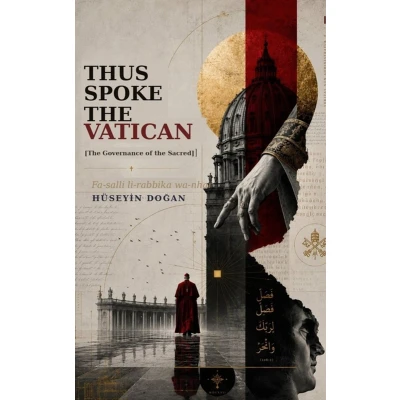
Every archive is a graveyard: it hides not only books, but those who buried them. There is no archive that does not burn - there are only fires no one speaks of. In the Vatican Archive, the fires were never recorded.When the historian Sinan Arslan descends into the Vatican Apostolic Archive, he finds a manuscript that lay hidden for fifteen hundred years. On every page stands a single word: Anhar - in Aramaic "river," in Syriac "light," and in Mandaean tradition purification itself. It is the silenced root of the Quranic word wa-nhar, that enigmatic word from the shortest sura of the Quran, onto which a strange meaning has been imposed for centuries. Yet a word is not obliged to bend to the meaning forced upon it.What Sinan uncovers in that fragile script is the trace of a community that called itself the Keepers of Anhar - the wardens of the flowing water. A tradition without a center, one that existed before Rome, before Christianity, and that preserved baptism in running water. At the Council of Nicaea in 325 it was shut out, declared heresy, banished from the order. And from that day on it fled: from Rome, from the crusaders, from the Ottomans - and at last from the modern world.This novel follows the trail of a question fifteen hundred years old: why does power, in every age, turn against the same target? From the Council of Nicaea to the court of the Umayyads, from the hadith chambers of Baghdad to the chronicles of the Crusades, from Mehmed's Constantinople to the rubble of Iraq in 2003: the method changes, the aim stays the same. For power always faces the same thing - a tradition without a center, one that rejects the temple, the Scripture, the hierarchy, and the confinement of God within the human mind, and that holds the river and the flow sacred.Stone is what stands still. Power loves stone. For the fixed can be named, sanctified, and controlled. Rome distrusted everything that spoke with the water. For water knows no borders, and the empire did not love those who knew none.Rome's gods were of stone. Its temples were of stone. Its laws were of stone. Its power was of stone - hard, heavy, immovable.But the water always found a way. And there were stones from which rivers sprang forth.A novel about faith, power, and the truth that will not be fixed in place - about the knowledge that is dangerous, and the ignorance that is more dangerous still. A story in which history, theology, and suspense flow together into a single current. For those who dare to read what was silenced for centuries.
 Productspecificaties
| EAN |
|
|---|---|
| Maat |
|
 Prijshistorie
 * Prijshistorie bevat geen data van Amazon.
Prijzen voor het laatst bijgewerkt op:
 Gerelateerde resultaten


