


€ 121,00 Gratis verzending

Uitgelicht
|
|
121,00 |
Naar shop
|

|
129,65 |
Naar shop
|

|
129,65 |
Naar shop
|
| VERGELIJK ALLE AANBIEDERS (3) | ||
 Beschrijving
Vergelijk aanbieders (3)
€ 121,00 Gratis verzending
€ 129,65 Gratis verzending
€ 129,65 Gratis verzending
Winkels met andere maten
Beschrijving
(1)
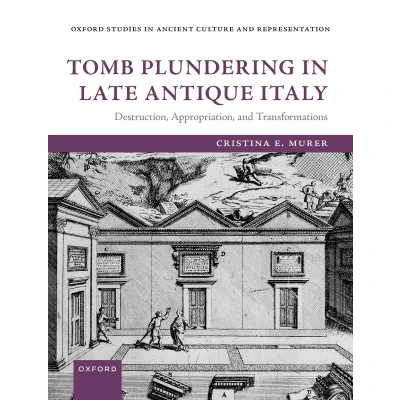
Tomb Plundering in Late Antique Italy offers a synthesis of the social practice of tomb robbing and the associated appropriation of funerary material for new construction. It demonstrates that looting and destruction were an important part of recycling processes in cites during the final centuries of the Roman Empire. This is an open access title available under the terms of a CC BY-NC-ND 4.0 International licence. It is free to read on the Oxford Academic platform and offered as a free PDF download from OUP and selected open access locations. Fears of tomb desecration, plundering, robbing, and looting have been present in societies throughout history. In ancient Greece and Rome, tombs were protected by law, and any kind of tomb violation was considered sacrilege. However, by the late Roman Empire, the social practice of tomb plundering had become a common occurrence. Despite archaeological evidence of its frequency, ancient tomb robbing has attracted little scholarly interest and legal and historical documents have rarely discussed the pilfering of tombs and subsequent appropriation of tomb decor for building purposes in late antiquity. Drawing on archaeological, literary, legal, and epigraphic sources, Tomb Plundering in Late Antique Italy investigates when, where, and why tomb plundering became a widespread phenomenon. It also addresses who was responsible and how broader historical and urban transformations led to the more frequent destruction of older tomb monuments in late Roman Italy. Both the social practice of tomb robbing and the associated appropriation of funerary material for new construction were an important part of recycling processes during the transition from classical antiquity to the Middle Ages. By exploring how people engaged and interacted with their material past, Cristina Murer presents new perspectives on late antique society, thereby broadening ongoing debates about transformations during this pivotal period.
 Prijshistorie
 * Prijshistorie bevat geen data van Amazon, Amazon Marketplace.
Prijzen voor het laatst bijgewerkt op:
 Gerelateerde resultaten
 Productspecificaties


