


€ 87,00 Gratis verzending

Uitgelicht
|
|
87,00 |
Naar shop
|

|
104,57 |
Naar shop
|
| VERGELIJK ALLE AANBIEDERS (2) | ||
 Beschrijving
Vergelijk aanbieders (2)
€ 87,00 Gratis verzending
€ 104,57 Gratis verzending
Winkels met andere maten
Beschrijving
(1)
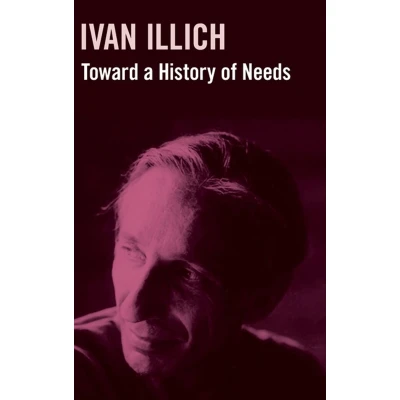
Previously unpublished essays on the service economy, the history of the gaze, the idea of technology as a Western invention, and the co-related eclipse of the university and the text in the twenty-first century. In these pages, Ivan Illich writes against the moral authority of professions, against economic “development” as an unquestioned good, against schooling as the privileged path to learning, against the subjugation of desire to needs, and against ever greater energy use. At first glance, much of this can seem passé. The prestige of the professions has withered; development is no longerdebated but assumed; education has migrated to platforms and certificates; needs have given way to desires; energy expansion is the unquestioned fuel for data centers and planetary competition.It seems the world has moved on. And yet Illich’s critique has not dulled — it has sharpened. The first quarter of the twenty-first century shows that Illich did not misread industrial society. His warning that life without access to commodities and services would become “impossible or criminal” now reads less like provocation than description. Economic development has intensified the compulsory dependence on cash in a world without enough paid jobs — whether in the United States or in Uganda. Desire is no longer suppressed by need, but is the explicit product of algorithmic persuasion, whose raw material is the envious fear of missing out. Professional authority has mutated into legal power. In many Western cities, sleeping in vehicles or building informal shelters invites fines or arrest. Without credentials one cannot cut hair, practice medicine, offer childcare, or drive. Access to work, to health, to money, and even to leisure presumes continuous digital connectivity. Commodity dependence no longer needs to be sold as progress. It is increasingly a legal requirement. These essays expose the deep logic driving the mutilation of human capacities into managed dependencies. What has changed in fifty years is not the pertinence of the argument but the brutality of the system it describes. With characteristic understatement, Illich also gestures toward an ungovernable possibility: engaging debilitating systems by playing with them, by dis-respecting them. If you think Illich is passé, try living without your smart phone for a week.
 Prijshistorie
 * Prijshistorie bevat geen data van Amazon.
Prijzen voor het laatst bijgewerkt op:
 Gerelateerde resultaten
 Productspecificaties


