


€ 48,99 Gratis verzending

Uitgelicht
|
|
48,99 |
Naar shop
|

|
132,99 |
Naar shop
|
| VERGELIJK ALLE AANBIEDERS (2) | ||
 Beschrijving
Vergelijk aanbieders (2)
€ 48,99 Gratis verzending
€ 132,99 Gratis verzending
Winkels met andere maten
Beschrijving
(1)
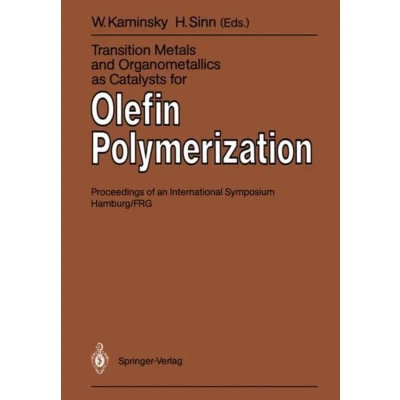
More than 30 years after the discovery of transition metals and organometal lics as catalysts for olefin polymerization these catalysts did not have lost their fascination. More than 30 years after the discovery of transition metals and organometal lics as catalysts for olefin polymerization these catalysts did not have lost their fascination. Since 1953 when Karl Ziegler has discovered the catalytic polymerization of ethylene leading to plastically formable polymers which are mechanically stable up to temperatures of about 100°C, synthetic polymers and rubbers have made their way right into private houses. This discovery has been a main impetus for the fast growing production of plastics. The stereoselective poly merization of propylene and other long-chain a-olefins first detected by Giulio Natta leads to an even broadened field of applications. Another enforcing factor were the developments of Standard Oil of Indiana and Phillipps Petroleum Company who engaged in the polymerization of a-olefins supported molybdenum, cobalt and later on chromium catalysts which clearly indicates the wide variety of suitable systems. This kind of research acknowledged merit when in 1963 the Nobel prize of chemistry was awarded to Ziegler and Natta. Although to a great extent there is a technical application for these catalysts, up to now the nature of the active centres and many reaction mechanisms are not completely known.
 Productspecificaties
| EAN |
|
|---|---|
| Maat |
|
 Prijshistorie
Prijzen voor het laatst bijgewerkt op:
 Gerelateerde resultaten


