








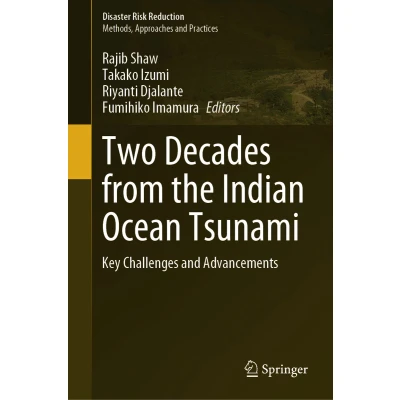
Two Decades from the Indian Ocean Tsunami: Key Challenges and Advancements
Uitgelicht

|
145,00 |
Naar shop
|
 Beschrijving
Bol
This book presents the advancements in the disaster risk reduction and resilience building in the countries affected by the Indian Ocean Tsunami countries. This book presents the advancements in the disaster risk reduction and resilience building in the countries affected by the Indian Ocean Tsunami countries. The book includes a few cross-cutting issues related to governance, technology, and communities, with two major parts: (1) cross-cutting issues and (2) regional and country level experiences. At the threshold of twenty years from Indian Ocean Tsunami, the concept of disaster risk reduction field has evolved significantly in the affected countries as well as around the world. Globally, several mega disasters happened in the last 20 years, and risk landscape has become more complex. In addition, technology, governance, and people’s resilience have gained positive momentum. We had two world conferences on disaster risk reduction, resulting in two global disaster risk reduction frameworks, which aligned with development frameworks as well as climate change agreements. COVID-19 and post COVID risk landscape has brought the new dimension of compound and complex disasters and need for all hazards’ approach. This book presents the advancements in the disaster risk reduction and resilience building in the countries affected by the Indian Ocean Tsunami countries. The book includes a few cross-cutting issues related to governance, technology, and communities, with two major parts: (1) cross-cutting issues and (2) regional and country level experiences. At the threshold of twenty years from Indian Ocean Tsunami, the concept of disaster risk reduction field has evolved significantly in the affected countries as well as around the world. Globally, several mega disasters happened in the last 20 years, and risk landscape has become more complex. In addition, technology, governance, and people’s resilience have gained positive momentum. We had two world conferences on disaster risk reduction, resulting in two global disaster risk reduction frameworks, which aligned with development frameworks as well as climate change agreements. COVID-19 and post COVID risk landscape has brought the new dimension of compound and complex disasters and need for all hazards’ approach.


Vergelijk aanbieders (1)

 Beschrijving
(1)
Beschrijving
(1)
This book presents the advancements in the disaster risk reduction and resilience building in the countries affected by the Indian Ocean Tsunami countries. This book presents the advancements in the disaster risk reduction and resilience building in the countries affected by the Indian Ocean Tsunami countries. The book includes a few cross-cutting issues related to governance, technology, and communities, with two major parts: (1) cross-cutting issues and (2) regional and country level experiences. At the threshold of twenty years from Indian Ocean Tsunami, the concept of disaster risk reduction field has evolved significantly in the affected countries as well as around the world. Globally, several mega disasters happened in the last 20 years, and risk landscape has become more complex. In addition, technology, governance, and people’s resilience have gained positive momentum. We had two world conferences on disaster risk reduction, resulting in two global disaster risk reduction frameworks, which aligned with development frameworks as well as climate change agreements. COVID-19 and post COVID risk landscape has brought the new dimension of compound and complex disasters and need for all hazards’ approach. This book presents the advancements in the disaster risk reduction and resilience building in the countries affected by the Indian Ocean Tsunami countries. The book includes a few cross-cutting issues related to governance, technology, and communities, with two major parts: (1) cross-cutting issues and (2) regional and country level experiences. At the threshold of twenty years from Indian Ocean Tsunami, the concept of disaster risk reduction field has evolved significantly in the affected countries as well as around the world. Globally, several mega disasters happened in the last 20 years, and risk landscape has become more complex. In addition, technology, governance, and people’s resilience have gained positive momentum. We had two world conferences on disaster risk reduction, resulting in two global disaster risk reduction frameworks, which aligned with development frameworks as well as climate change agreements. COVID-19 and post COVID risk landscape has brought the new dimension of compound and complex disasters and need for all hazards’ approach.
 Productspecificaties
| EAN |
|
|---|---|
| Maat |
|
 Prijshistorie
Prijzen voor het laatst bijgewerkt op:
 Gerelateerde resultaten


