
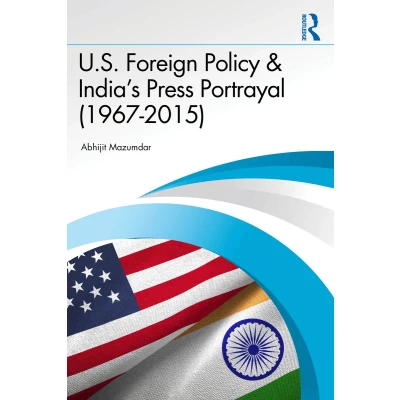
U.S. Foreign Policy & India’s Press Portrayal (1967-2015)
Uitgelicht

|
51,99 |
Naar shop
|
| VERGELIJK ALLE AANBIEDERS (1) | ||
 Beschrijving
Bol
This comprehensive study examines how U.S. foreign policy influenced media portrayal of India across nearly five decades (1967-2015), spanning the Cold War and post-Cold War periods. This comprehensive study examines how U.S. foreign policy influenced media portrayal of India across nearly five decades (1967-2015), spanning the Cold War and post-Cold War periods. Through systematic analysis of The New York Times and The Washington Post, the book reveals how American media coverage of India shifted dramatically from adversarial during the Cold War to supportive alliance coverage afterward. The book employs both quantitative content analysis and qualitative thematic analysis to demonstrate how media indexing theory applies to international reporting. Using chi-square statistical tests across five key parameters—trade, defense, nuclear policy, terrorism, and secessionist movements—it provides empirical evidence of media alignment with government foreign policy positions. The research introduces a novel theoretical framework dividing indexing theory into primary (international) and secondary (domestic) categories, offering new insights into media-government relationships in foreign affairs reporting. This work serves postgraduate students, researchers, and academics in political science, international relations, journalism, and media studies. It provides essential reading for courses on media and politics, foreign policy analysis, and international communication, particularly those examining US-India relations or media theory applications.


Vergelijk aanbieders (1)

 Beschrijving
(1)
Beschrijving
(1)
This comprehensive study examines how U.S. foreign policy influenced media portrayal of India across nearly five decades (1967-2015), spanning the Cold War and post-Cold War periods. This comprehensive study examines how U.S. foreign policy influenced media portrayal of India across nearly five decades (1967-2015), spanning the Cold War and post-Cold War periods. Through systematic analysis of The New York Times and The Washington Post, the book reveals how American media coverage of India shifted dramatically from adversarial during the Cold War to supportive alliance coverage afterward. The book employs both quantitative content analysis and qualitative thematic analysis to demonstrate how media indexing theory applies to international reporting. Using chi-square statistical tests across five key parameters—trade, defense, nuclear policy, terrorism, and secessionist movements—it provides empirical evidence of media alignment with government foreign policy positions. The research introduces a novel theoretical framework dividing indexing theory into primary (international) and secondary (domestic) categories, offering new insights into media-government relationships in foreign affairs reporting. This work serves postgraduate students, researchers, and academics in political science, international relations, journalism, and media studies. It provides essential reading for courses on media and politics, foreign policy analysis, and international communication, particularly those examining US-India relations or media theory applications.
 Productspecificaties
| EAN |
|
|---|---|
| Maat |
|
 Prijshistorie
Prijzen voor het laatst bijgewerkt op:
 Gerelateerde resultaten


