
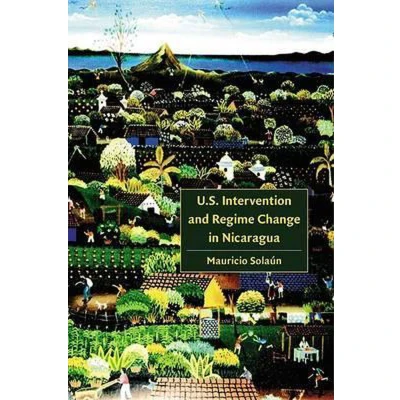
U.S. Intervention and Regime Change in Nicaragua
Uitgelicht

|
17,95 |
Naar shop
|
| VERGELIJK ALLE AANBIEDERS (1) | ||
 Beschrijving
Bol Partner
As President Carter's ambassador to Nicaragua from 1977-1979, Mauricio Solaun witnessed a critical moment in Central American history. In U.S. Intervention and Regime Change in Nicaragua, Solaun outlines the role of U.S. foreign policy during the Carter administration and explains how this policy with respect to the Nicaraguan Revolution of 1979 not only failed but helped impede the institutionalization of democracy there. Late in the 1970s, the United States took issue with the Nicaraguan dictator Anastasio Somoza. Moral suasion, economic sanctions, and other peaceful instruments from Washington led to violent revolution in Nicaragua and bolstered a new dictatorial government. A U.S.-supported counterrevolution formed, and Solaun argues that the United States attempts to this day to determine who rules Nicaragua. Solaun explores the mechanisms that kept Somoza's poorly legitimized regime in power for decades, making it the most enduring Latin American authoritarian regime of the twentieth century. Solaun argues that continual shifts in U.S. international policy have been made in response to previous policies that failed to produce U.S.- friendly international environments. His historical survey of these policy shifts provides a window on the working of U.S. diplomacy and lessons for future policy-making.


Vergelijk aanbieders (1)

 Beschrijving
(1)
Beschrijving
(1)
As President Carter's ambassador to Nicaragua from 1977-1979, Mauricio Solaun witnessed a critical moment in Central American history. In U.S. Intervention and Regime Change in Nicaragua, Solaun outlines the role of U.S. foreign policy during the Carter administration and explains how this policy with respect to the Nicaraguan Revolution of 1979 not only failed but helped impede the institutionalization of democracy there. Late in the 1970s, the United States took issue with the Nicaraguan dictator Anastasio Somoza. Moral suasion, economic sanctions, and other peaceful instruments from Washington led to violent revolution in Nicaragua and bolstered a new dictatorial government. A U.S.-supported counterrevolution formed, and Solaun argues that the United States attempts to this day to determine who rules Nicaragua. Solaun explores the mechanisms that kept Somoza's poorly legitimized regime in power for decades, making it the most enduring Latin American authoritarian regime of the twentieth century. Solaun argues that continual shifts in U.S. international policy have been made in response to previous policies that failed to produce U.S.- friendly international environments. His historical survey of these policy shifts provides a window on the working of U.S. diplomacy and lessons for future policy-making.
 Productspecificaties
| EAN |
|
|---|---|
| Maat |
|
 Prijshistorie
Prijzen voor het laatst bijgewerkt op:
 Gerelateerde resultaten


