


€ 125,00 Gratis verzending

Uitgelicht
|
|
125,00 |
Naar shop
|
| VERGELIJK ALLE AANBIEDERS (1) | ||
 Beschrijving
Vergelijk aanbieders (1)
€ 125,00 Gratis verzending
Winkels met andere maten
Beschrijving
(1)
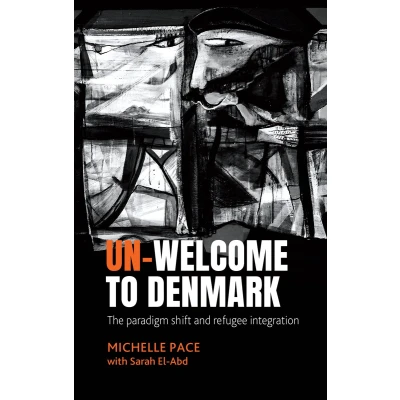
Un-welcome to Denmark critically assesses the impact of the harsh Danish migration regime on Syrian refugees and welfare professionals and private stakeholders tasked to support their integration into their host society. It thereby traces how a once revered liberal society has turned into Europe’s strictest migration regimes. 'This brilliant and thought-provoking book explodes the myth of Denmark as a happy, liberal and welcoming society for migrants and refugees. Based on in-depth interviews with Syrian migrants and a variety of key interlocutors, Michelle Pace, with Sarah El-Abd, forensically exposes the tensions, illogicalities and injustices in Denmark’s racist, illiberal, exclusionary and assimilationist policies towards asylum-seekers and refugees. Written from the perspective of critical migration studies, Un-welcome to Denmark is a must-read for scholars, students and policy-makers.' Professor Russell King, Emeritus Professor (Geography), University of Sussex 'Michelle Pace’s book Un-welcome to Denmark is a solid scientific analysis – framed through the author’s very critical view on present-day Danish refugee policy. Whatever your own views, it is worth reading this book to get a nuanced grasp of the realities and the human consequences of – not least - the so called paradigm shift.' Mogens Lykketoft, , former Danish minister of foreign affairs, speaker of the Danish parliament and president of the UN General AssemblyUn-welcome to Denmark critically assesses the Danish migration regime from the initial enactment of its Aliens Act in 1983 up until the 2019 paradigm shift. It does so by engaging multiple stakeholders that are impacted by the harshness of this regime’s gaze and maze: Syrian refuges, welfare and civil society professionals as well as private businesses CSR and diversity managers. Presenting the theory of the unwelcome migrant co-produced with these multiple stakeholders, the book documents how Denmark’s migration policies and laws produce and maintain migrants’ undeservedness and how they produce anxieties across those they directly target as well as those tasked with supporting them. It reveals how the Danish migration regime is effectuated – to a significant extent – by the practices of public (municipalities) and nonstate (civil society and private) actors, complementing each others’ endeavours. Un-welcome to Denmark, by Michelle Pace with Sarah El-Abd, critically assesses Denmark’s migration regime by directly engaging the voices of multiple stakeholders impacted by its harshness. It puts forward the theory of the ' unwelcome migrant' by undertaking an extensive analysis of the programmatic and legal foundations for the ' undeserving migrant' as well as of the lived experiences of Syrian refugees, welfare professionals and private businesses tasked with supporting them. It thereby documents the ways in which the Danish migration gaze produces and perpetuates the hyper precarity of the everyday lives of Syrians and the anxiety that overshadows the manner in which Syrians and those who support them navigate its maze. By so doing, it traces how a once admired, liberal, tolerant and open society with a strong reverence for human rights has turned into one of the harshest migration regimes in Europe, if not internationally.
 Productspecificaties
| EAN |
|
|---|---|
| Maat |
|
 Prijshistorie
 Prijzen voor het laatst bijgewerkt op:
 Gerelateerde resultaten


