








Uncertainty and Explanation in Medicine the Health Sciences
Uitgelicht

|
139,00 |
Naar shop
|
 Beschrijving
Bol
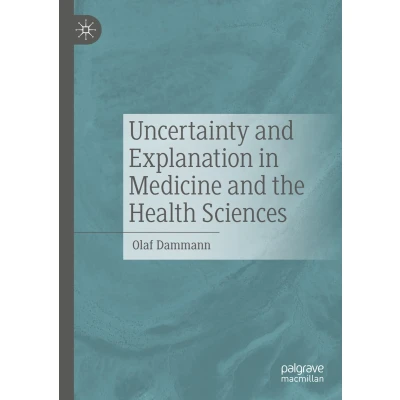
Olaf Dammann explores recent accounts of medicine as ineffective and suggests that the impression that medicine does not achieve its goal is, at least in part, due to the aleatoric (natural) uncertainty of biomedical processes and the subsequent epistemic (cognitive) uncertainty of those who desire solid information about such processes. This book offers a comprehensive account of how uncertainty is tackled in medicine and the health sciences. Olaf Dammann explores recent accounts of medicine as ineffective and suggests that the impression that medicine does not achieve its goal is, at least in part, due to the aleatoric (natural) uncertainty of biomedical processes and the subsequent epistemic (cognitive) uncertainty of those who desire solid information about such processes. Dammann shows how concepts like inference, explanation, and causometry help mitigate this disconnect. He points toward the possibility that some of the statistically rigid and formalized approaches (such as the randomized controlled trial as the gold standard for the justification of medical interventions) might better be replaced by approaches that emphasize the coherence of evidence and the people’s needs for helpful health interventions (auxiliarianism). Olaf Dammann is professor of Public Health and Community Medicine at Tufts University School of Medicine, USA. His main fields of research are philosophy of health science and perinatal epidemiology. This book offers a comprehensive account of how uncertainty is tackled in medicine and the health sciences. Olaf Dammann explores recent accounts of medicine as ineffective and suggests that the impression that medicine does not achieve its goal is, at least in part, due to the aleatoric (natural) uncertainty of biomedical processes and the subsequent epistemic (cognitive) uncertainty of those who desire solid information about such processes. Dammann shows how concepts like inference, explanation, and causometry help mitigate this disconnect. He points toward the possibility that some of the statistically rigid and formalized approaches (such as the randomized controlled trial as the gold standard for the justification of medical interventions) might better be replaced by approaches that emphasize the coherence of evidence and the people’s needs for helpful health interventions (auxiliarianism).


Vergelijk aanbieders (1)

 Beschrijving
(1)
Beschrijving
(1)
Olaf Dammann explores recent accounts of medicine as ineffective and suggests that the impression that medicine does not achieve its goal is, at least in part, due to the aleatoric (natural) uncertainty of biomedical processes and the subsequent epistemic (cognitive) uncertainty of those who desire solid information about such processes. This book offers a comprehensive account of how uncertainty is tackled in medicine and the health sciences. Olaf Dammann explores recent accounts of medicine as ineffective and suggests that the impression that medicine does not achieve its goal is, at least in part, due to the aleatoric (natural) uncertainty of biomedical processes and the subsequent epistemic (cognitive) uncertainty of those who desire solid information about such processes. Dammann shows how concepts like inference, explanation, and causometry help mitigate this disconnect. He points toward the possibility that some of the statistically rigid and formalized approaches (such as the randomized controlled trial as the gold standard for the justification of medical interventions) might better be replaced by approaches that emphasize the coherence of evidence and the people’s needs for helpful health interventions (auxiliarianism). Olaf Dammann is professor of Public Health and Community Medicine at Tufts University School of Medicine, USA. His main fields of research are philosophy of health science and perinatal epidemiology. This book offers a comprehensive account of how uncertainty is tackled in medicine and the health sciences. Olaf Dammann explores recent accounts of medicine as ineffective and suggests that the impression that medicine does not achieve its goal is, at least in part, due to the aleatoric (natural) uncertainty of biomedical processes and the subsequent epistemic (cognitive) uncertainty of those who desire solid information about such processes. Dammann shows how concepts like inference, explanation, and causometry help mitigate this disconnect. He points toward the possibility that some of the statistically rigid and formalized approaches (such as the randomized controlled trial as the gold standard for the justification of medical interventions) might better be replaced by approaches that emphasize the coherence of evidence and the people’s needs for helpful health interventions (auxiliarianism).
 Productspecificaties
| EAN |
|
|---|---|
| Maat |
|
 Prijshistorie
Prijzen voor het laatst bijgewerkt op:
 Gerelateerde resultaten


