
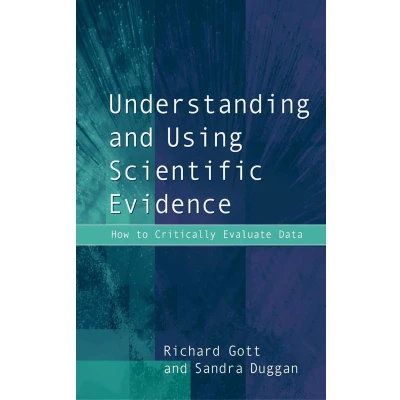
Understanding and Using Scientific Evidence
Uitgelicht

|
51,99 |
Naar shop
|
| VERGELIJK ALLE AANBIEDERS (1) | ||
 Beschrijving
Bol
It is essential to be able to be critical of scientific evidence. Sets out the principles of investigation so that the reader will be confident in questioning the experts, making an informed choice or arriving at an informed opinion. The basic understanding which underlies scientific evidence - ideas such as the structure of experiments, causality, repeatability, validity and reliability- is not straightforward. But these ideas are needed to judge evidence in school science, in physics or chemistry or biology or psychology, in undergraduate science, and in understanding everyday issues to do with science. It is essential to be able to be critical of scientific evidence. The authors clearly set out the principles of investigation so that the reader will be confident in questioning the experts, making an informed choice or arriving at in informed opinion. The book is intended for a wide range of readers including those who want to: } collect their own evidence } be able to question and judge a wide range of science-based issues that we come across in the press or other media in everyday life } teach others how to understand evidence. This book has been developed from the authors′ work with first year undergraduates in a combined science course and in primary teacher training for science specialists. It is suitable for students training as primary science specialists, and also for ′A′ level and first-year undergraduates in science and science-related subjects.


Vergelijk aanbieders (1)

 Beschrijving
(1)
Beschrijving
(1)
It is essential to be able to be critical of scientific evidence. Sets out the principles of investigation so that the reader will be confident in questioning the experts, making an informed choice or arriving at an informed opinion. The basic understanding which underlies scientific evidence - ideas such as the structure of experiments, causality, repeatability, validity and reliability- is not straightforward. But these ideas are needed to judge evidence in school science, in physics or chemistry or biology or psychology, in undergraduate science, and in understanding everyday issues to do with science. It is essential to be able to be critical of scientific evidence. The authors clearly set out the principles of investigation so that the reader will be confident in questioning the experts, making an informed choice or arriving at in informed opinion. The book is intended for a wide range of readers including those who want to: } collect their own evidence } be able to question and judge a wide range of science-based issues that we come across in the press or other media in everyday life } teach others how to understand evidence. This book has been developed from the authors′ work with first year undergraduates in a combined science course and in primary teacher training for science specialists. It is suitable for students training as primary science specialists, and also for ′A′ level and first-year undergraduates in science and science-related subjects.
 Productspecificaties
| EAN |
|
|---|---|
| Maat |
|
 Prijshistorie
Prijzen voor het laatst bijgewerkt op:
 Gerelateerde resultaten


