


€ 74,99 Gratis verzending

Uitgelicht
|
|
74,99 |
Naar shop
|

|
100,12 |
Naar shop
|

|
100,12 |
Naar shop
|
| VERGELIJK ALLE AANBIEDERS (3) | ||
 Beschrijving
Vergelijk aanbieders (3)
€ 74,99 Gratis verzending
€ 100,12 € 4,39 verzendkosten Totaal € 104,51
€ 100,12 € 4,39 verzendkosten Totaal € 104,51
Winkels met andere maten
Beschrijving
(1)
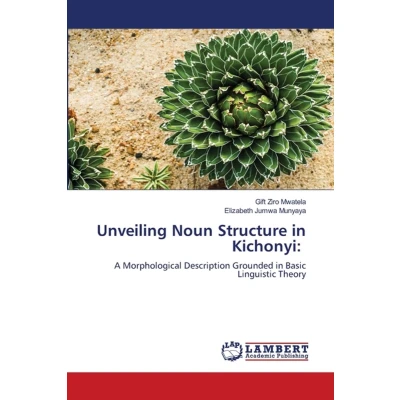
This book presents a morphological description of nouns in Kichonyi, a Bantu language spoken in Kilifi South, Kenya. It documents the internal structure of nouns using Basic Linguistic Theory (Dixon, 2010) as a descriptive framework. The study identifies noun types, examines phonological conditions that trigger singular and plural noun markers, and analyzes morpho-phonological processes involved in noun formation. Findings show that Kichonyi has about 19 noun classes, with many nouns derived from verbs, adjectives and other nouns. Noun formation occurs through compounding, reduplication, borrowing, blending and clipping. The study also reveals that consonants and vowels influence the distribution of noun class markers. Key morpho-phonological processes include consonant weakening, nasalization, homorganic nasal assimilation (Ganda Law), labialization, glide formation, deletion and vowel insertion, each governed by specific phonological rules. The study shows a strong interaction between phonology and morphology in shaping noun structure.
 Prijshistorie
 * Prijshistorie bevat geen data van Amazon, Amazon Marketplace.
Prijzen voor het laatst bijgewerkt op:
 Gerelateerde resultaten
 Productspecificaties


