


€ 115,00 Gratis verzending

Uitgelicht
|
|
115,00 |
Naar shop
|
| VERGELIJK ALLE AANBIEDERS (1) | ||
 Beschrijving
Vergelijk aanbieders (1)
€ 115,00 Gratis verzending
Winkels met andere maten
Beschrijving
(1)
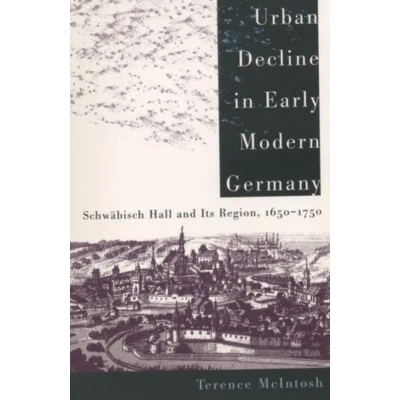
Focusing on the town of Schwabisch Hall, the author explores the recovery of the region's urban communities after the Thirty Years' War. He argues that changing relations between town and country contributed to the weakening of craft production, and therefore, to the region's urban stagnation. During the Middle Ages, southwest Germany was one of the most prosperous areas of central Europe, but the Thirty Years' War brought devastating social and economic dislocation to the region. Focusing on the town of SchwNbisch Hall, Terence McIntosh explores the causes and consequences of the sluggish recovery of the region's urban communities in the century after the signing of the Treaty of Westphalia in 1648. He argues that changing relations between town and countryside contributed significantly to the weakening of urban craft production and, therefore, to the region's urban stagnation. In his economic and structural analysis of SchwNbisch Hall, McIntosh explores the significance and changes over time of wealth inequalities, marriage and migration patterns, and class formation. He demonstrates that the rapid proliferation of the rural craft industry within the region eroded the ability of small-scale urban artisans to keep pace. This process in turn profoundly affected the structure of urban society and economy. McIntosh's analysis constitutes a significant reinterpretation of the process of urban class formation and economic transformation in early modern Germany.
 Productspecificaties
| EAN |
|
|---|---|
| Maat |
|
 Prijshistorie
 Prijzen voor het laatst bijgewerkt op:
 Gerelateerde resultaten


