
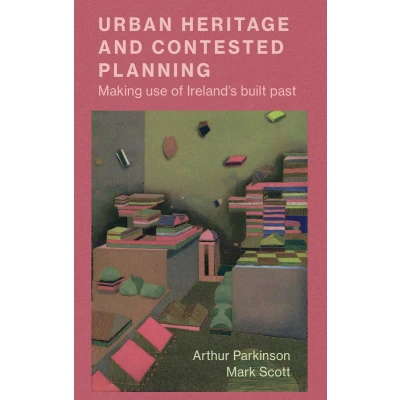
Urban Heritage and Contested Planning: Making Use of Ireland's Built Past
Uitgelicht

|
99,99 |
Naar shop
|
| VERGELIJK ALLE AANBIEDERS (1) | ||
 Beschrijving
Bol
Urban heritage and contested planning: Making use of Ireland’s built past explores the transformation of urban heritage preservation in Ireland, from a peripheral concern to a cornerstone of urban identity and growth. The book tackles pressing questions on whose heritage is preserved, why, and how, urging for democratic, inclusive frameworks. The conservation of built heritage has emerged as a vital component of urban planning and policy. Once a niche consideration, heritage preservation is now widely recognised for its economic, social, and environmental value, influencing how cities project themselves to both residents and visitors. Yet, while there is broad agreement on the importance of safeguarding historic structures and environments for the public good and for future generations, the complexities surrounding what should be preserved, why, and how are far from settled. Equally pressing are questions about who gets to make these decisions, sparking important debates about values, inclusivity, and knowledge within conservation-planning frameworks.Focusing on Ireland, this book explores these themes, tracing the development of heritage policy since Irish independence and examining how postcolonial experiences have shaped urban conservation debates. It discusses the challenges of managing historic environments tied to colonial histories, especially in the context of expert/non-expert narratives and property-led regeneration and place-marketing within neoliberal urban strategies. Here, planning and conservation officials must balance modernisation with the preservation of cultural values embedded in the urban landscape.This book advocates for a more democratic, inclusive approach to conservation-planning, emphasising decision-making frameworks that integrate both tangible and intangible heritage. By linking heritage to place-making, it calls for policies that reflect diverse voices and values, fostering urban spaces that reflects inherited culture while engaging community identity and contemporary needs. Urban heritage and contested planning: Making use of Ireland’s built past delves into the evolving role of heritage preservation within urban planning, focusing on Ireland's complex urban landscape since independence. Once marginal, heritage conservation is now seen as essential to urban identity, community well-being, and sustainable growth. Yet, this conservation practice grapples with unresolved questions: What heritage should be preserved, why and how, and who gets to decide? This book critically examines these challenges, exploring how Ireland’s postcolonial legacy shapes debates around expert and public narratives, colonial-era architecture, and the use of heritage within property-led regeneration in neoliberal contexts. Advocating for more democratic, inclusive frameworks, this book explores the intricate intersections of tangible and intangible heritage in fostering vibrant, culturally resonant urban landscapes. Urban heritage and contested planning is an essential text for scholars, policymakers, and advocates invested in sustainable, community-driven approaches to urban conservation.


Vergelijk aanbieders (1)

 Beschrijving
(1)
Beschrijving
(1)
Urban heritage and contested planning: Making use of Ireland’s built past explores the transformation of urban heritage preservation in Ireland, from a peripheral concern to a cornerstone of urban identity and growth. The book tackles pressing questions on whose heritage is preserved, why, and how, urging for democratic, inclusive frameworks. The conservation of built heritage has emerged as a vital component of urban planning and policy. Once a niche consideration, heritage preservation is now widely recognised for its economic, social, and environmental value, influencing how cities project themselves to both residents and visitors. Yet, while there is broad agreement on the importance of safeguarding historic structures and environments for the public good and for future generations, the complexities surrounding what should be preserved, why, and how are far from settled. Equally pressing are questions about who gets to make these decisions, sparking important debates about values, inclusivity, and knowledge within conservation-planning frameworks.Focusing on Ireland, this book explores these themes, tracing the development of heritage policy since Irish independence and examining how postcolonial experiences have shaped urban conservation debates. It discusses the challenges of managing historic environments tied to colonial histories, especially in the context of expert/non-expert narratives and property-led regeneration and place-marketing within neoliberal urban strategies. Here, planning and conservation officials must balance modernisation with the preservation of cultural values embedded in the urban landscape.This book advocates for a more democratic, inclusive approach to conservation-planning, emphasising decision-making frameworks that integrate both tangible and intangible heritage. By linking heritage to place-making, it calls for policies that reflect diverse voices and values, fostering urban spaces that reflects inherited culture while engaging community identity and contemporary needs. Urban heritage and contested planning: Making use of Ireland’s built past delves into the evolving role of heritage preservation within urban planning, focusing on Ireland's complex urban landscape since independence. Once marginal, heritage conservation is now seen as essential to urban identity, community well-being, and sustainable growth. Yet, this conservation practice grapples with unresolved questions: What heritage should be preserved, why and how, and who gets to decide? This book critically examines these challenges, exploring how Ireland’s postcolonial legacy shapes debates around expert and public narratives, colonial-era architecture, and the use of heritage within property-led regeneration in neoliberal contexts. Advocating for more democratic, inclusive frameworks, this book explores the intricate intersections of tangible and intangible heritage in fostering vibrant, culturally resonant urban landscapes. Urban heritage and contested planning is an essential text for scholars, policymakers, and advocates invested in sustainable, community-driven approaches to urban conservation.
 Productspecificaties
| EAN |
|
|---|---|
| Maat |
|
 Prijshistorie
Prijzen voor het laatst bijgewerkt op:
 Gerelateerde resultaten


