


€ 29,99 Gratis verzending

Uitgelicht
|
|
29,99 |
Naar shop
|

|
108,99 |
Naar shop
|
| VERGELIJK ALLE AANBIEDERS (2) | ||
 Beschrijving
Vergelijk aanbieders (2)
€ 29,99 Gratis verzending
€ 108,99 Gratis verzending
Winkels met andere maten
Beschrijving
(1)
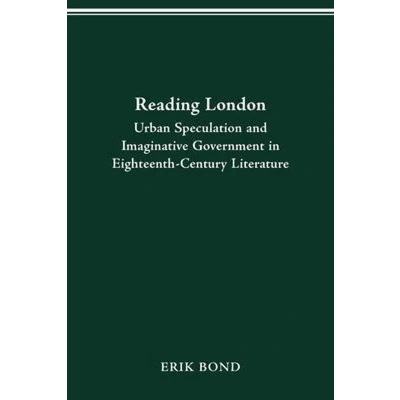
While seventeenth-century London may immediately evoke images of Shakespeare and thatched roof-tops and nineteenth-century London may call forth images of Dickens and cobblestones, a popular conception of eighteenth-century London has been more difficult to imagine. In fact, the immense variety of textual traditions, metaphors, classical allusions, and contemporary contexts that eighteenth-century writers use to illustrate eighteenth-century London may make eighteenth-century London seem more strange and foreign to twenty-first-century readers than any of its other historical reincarnations. Indeed, &;imagining&; a familiar, unified London was precisely the task that occupied so many writers in London after the 1666 Fire decimated the City and the 1688 Glorious Revolution destabilized the English monarchy&;s absolute power. In the authoritative void created by these two events, writers in London faced not only the problem of how to guide readers&; imaginations to a unified conception of London, but also the problem of how to govern readers whom they would never meet. Erik Bond argues that Restoration London&;s rapidly changing administrative geography as well as mid-eighteenth-century London&;s proliferation of print helped writers generate several strategies to imagine that they could control not only other Londoners but also their interior selves. As a result, Reading London encourages readers to respect the historical alterity or &;otherness&; of eighteenth-century literature while recognizing that these historical alternatives prove that our present problems with urban societies do not have to be this way. In fact, the chapters illustrate how eighteenth-century writers gesture towards solutions to problems that urban citizens now face in terms of urban terror, crime, policing, and communal conduct.
 Productspecificaties
| EAN |
|
|---|---|
| Maat |
|
 Prijshistorie
Prijzen voor het laatst bijgewerkt op:
 Gerelateerde resultaten


