

€ 15,00 Gratis verzending

Uitgelicht
|
|
15,00 |
Naar shop
|

|
15,00 |
Naar shop
|

|
16,00 |
Naar shop
|
| VERGELIJK ALLE AANBIEDERS (3) | ||
 Beschrijving
Vergelijk aanbieders (3)
€ 15,00 Gratis verzending
€ 15,00 Gratis verzending
€ 16,00 € 2,99 verzendkosten Totaal € 18,99
Winkels met andere maten
Beschrijving
(1)
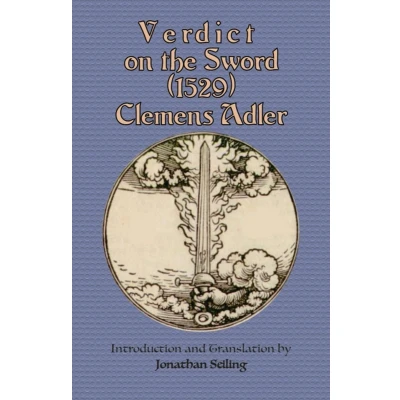
The original German title, as it appears in the typescript version from which the present translation was made, is Das Urteil von dem Schwert mit unterschidlichem gewalt Dreier Fürstenthum der Welt, Juden, und Christen, mit Anderen Anliegenden Sachen. The full title in translation would read, Verdict on the Sword and How its Force Applies in Different Ways to the Three Principalities - World, Jews and Christians - along with other related matters. The "related matters" include topics such as baptism, marriage, oath swearing, the Lord's Supper, community of goods, covenant, the Jewish festivals and Temple, etc.Though it was likely intended for publication, appears that the treatise was never published. Only two handwritten versions were ever found, although more possibly existed. The two known handwritten versions have now been lost, and no microfilm of either exists. In 1946, the Swiss Mennonite pastor and historian Samuel Geiser learned of the manuscript that was found in the attic of a farmhouse in Langnau, Canton Berne, Switzerland. It remained in private ownership until at least 1967. According to H.S. Bender, it was owned in 1737 by Claus Wütherich, a resident of Canton Berne, Switzerland, and the copy he owned was later transcribed by Samuel Geiser, which is the basis of the present translation.As early as 1953, Robert Kreider, who wrongly assumed that Adler had lived in Berne, analyzed the whole treatise and offered pages of short but salient quotes. James Stayer was the first scholar to contrast Adler's views, however briefly, with those of other Anabaptists. He described it as "radical apoliticism in the broad context of a Christology, a providential interpretation of history and an allegorical connection of Judaism and Christianity." More recently, C.J. Dyck insisted that the treatise still deserved further attention. Since then, Werner Packull and Martin Rothkegel have provided the fullest assessment of Adler's leadership role in Silesia as well as textual analysis of the treatise. Packull was the first to highlight Adler's leadership within the context of the rise and development of Anabaptism in Silesia and Moravia. Packull himself called this treatise "the most substantive statement on the pacifism of early Anabaptism" and elsewhere "the most comprehensive and important early Anabaptist statement on nonresistance."
 Prijshistorie
 * Prijshistorie bevat geen data van Amazon, Amazon Marketplace.
Prijzen voor het laatst bijgewerkt op:
 Gerelateerde resultaten
 Productspecificaties


